How to choose an embedded development platform for long-life devices
Start with the product lifecycle, not the dev board
An embedded development platform should help an engineering team move from prototype to maintained product with less porting work, fewer toolchain surprises and a clearer path for updates. The right choice depends on the workload, operating system model, hardware abstraction, debugging tools, security process, documentation quality and long-term support. For a short-lived proof of concept, a vendor evaluation board and SDK may be enough. For a connected product expected to remain in the field for five to ten years, the platform also needs to support reproducible builds, vulnerability tracking, software bills of materials, firmware update planning and hardware migration.
The practical question is not which platform is best in general. It is which platform removes the most risk for the specific product. A battery-powered sensor, an industrial gateway, a camera device and an automotive edge controller may all be embedded systems, but they require very different balances of real-time behavior, Linux capability, certification evidence, peripheral support and maintainability.
What counts as an embedded development platform
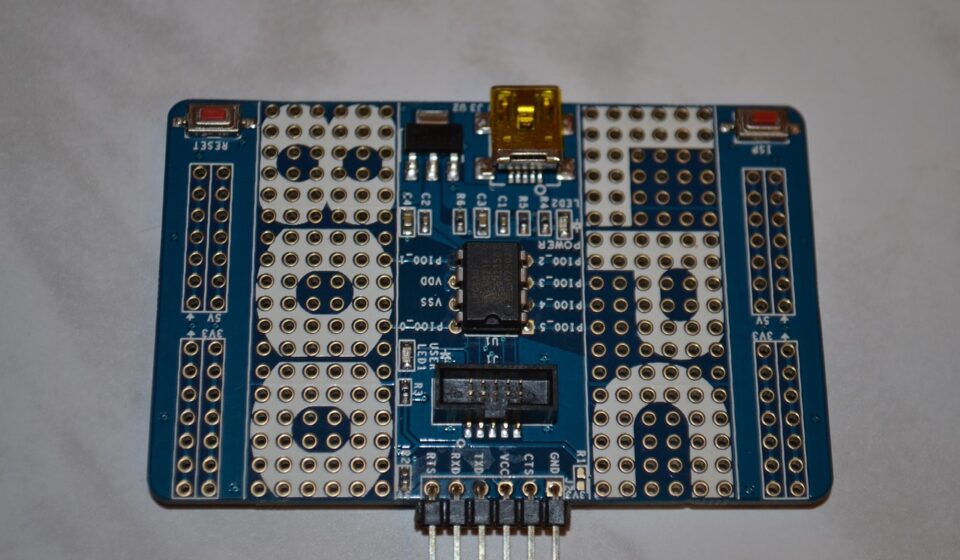
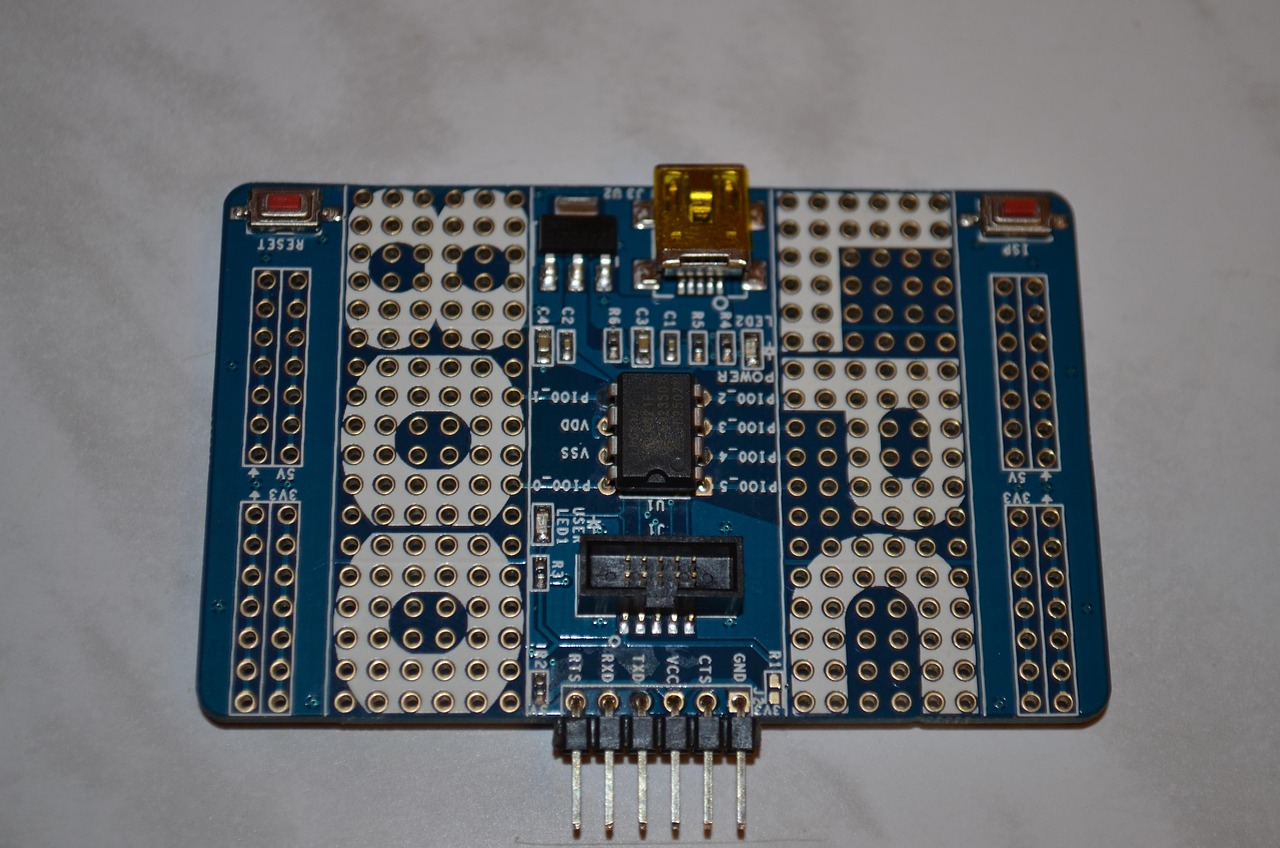
In product planning, the term embedded development platform is often used loosely. It may mean a development board, a system-on-module, a microcontroller SDK, an RTOS ecosystem, an embedded Linux build system, an IDE, a reference design or a cloud-connected device framework. A more useful definition is broader: the complete environment that lets engineers build, test, debug, secure, update and maintain software for the target embedded device.
A production-oriented platform usually includes several layers:
- Target hardware, such as a microcontroller, MPU, SoC, FPGA-based board or system-on-module.
- Board support software, including boot firmware, device drivers, pin configuration, memory layout and peripheral examples.
- Operating system support, from bare-metal loops to RTOS kernels, embedded Linux distributions or mixed RTOS and Linux designs.
- Build and configuration tools, including compilers, linkers, package recipes, Kconfig-style options, Devicetree descriptions or vendor configuration utilities.
- Debug and test workflow, including JTAG or SWD debug, trace, simulation, hardware-in-the-loop testing and CI integration.
- Lifecycle assets, such as release notes, update mechanisms, security advisories, SBOM output, license compliance data and migration guidance.
This wider view helps avoid a common mistake: choosing a board because the demo runs quickly, then finding late in the program that the BSP is difficult to update, the toolchain is tied to an old host system or the platform has no credible vulnerability response process.
Match the platform type to the device architecture
The first decision is architectural. A small MCU product with strict sleep-current limits rarely belongs on the same platform as an edge gateway running containers, computer vision or multiple network services. Teams should classify the device by compute class before comparing brands or boards.
MCU and RTOS platforms
MCU-oriented platforms are usually strongest when the product needs deterministic timing, a small memory footprint, low power consumption and close control of peripherals. They often combine vendor SDKs, HAL libraries, example applications and an RTOS. Zephyr Project documentation describes Zephyr as a scalable open source RTOS supporting multiple hardware architectures, and its release documentation as of October 14, 2026 listed Zephyr 4.4.0 as the latest stable release, released on April 14, 2026. The same release documentation notes that regular stable releases are supported for roughly two release cycles, while LTS releases are maintained independently for a longer period.
For teams considering an RTOS-centered platform, the key checks are whether the board support is upstreamed, whether the driver model covers the required peripherals, whether the scheduler and power-management features fit the product, and whether the release cadence aligns with the support commitment made to customers.
Embedded Linux platforms
Embedded Linux platforms suit products that need rich networking, file systems, user-space process isolation, advanced security tooling, complex middleware or frequent application updates. Yocto Project is commonly used when teams need a customized Linux distribution rather than a fixed binary image. According to Yocto Project release documentation, normal stable releases have shorter support windows, while LTS releases provide a longer maintenance path; the documentation listed Yocto Project 6.0 Wrynose, released in May 2026, as an LTS release supported until April 2030.
Linux-based platforms need more planning around boot time, storage layout, update rollback, kernel maintenance, user-space package provenance and field diagnostics. They can be highly maintainable, but only when the build system is treated as a product asset rather than a one-time image-generation tool.
Standardized Arm platforms and modules
For Arm A-profile systems, hardware and firmware standardization can reduce operating system porting work. Arm describes SystemReady as a compliance program intended to improve operating system interoperability on Arm-based hardware. Its public program materials state that the SystemReady Devicetree band is aimed at embedded systems where Devicetree is the preferred hardware description method, especially for Linux and BSD environments.
This matters because embedded teams often underestimate the cost of custom boot flows and nonstandard firmware behavior. A standards-aligned module or reference platform may cost more than a bare chip or minimal board, but it can reduce integration time when the product depends on mainstream kernels, generic distributions, secure boot chains or future hardware substitutions.
Selection criteria that affect real projects
A practical selection process should score each candidate platform against engineering risk, not only headline specifications. CPU speed, memory size and peripheral count are visible on a data sheet. Support quality, update cadence and test automation often determine whether the platform remains usable after the first production release.
| Criterion | Why it matters | What to check |
|---|---|---|
| Hardware abstraction | Reduces porting cost when boards, modules or silicon revisions change. | Driver model, Devicetree or equivalent hardware description, BSP maintainability and upstream status. |
| Build reproducibility | Makes releases auditable and easier to patch years later. | Pinned toolchains, containerized builds, documented dependencies and repeatable output. |
| Debug visibility | Shortens bring-up and field failure analysis. | Trace support, crash dumps, logging, performance profiling and hardware debug access. |
| Security maintenance | Connected devices need ongoing vulnerability response. | Advisory process, CVE tracking, secure boot, signed updates and supported cryptographic libraries. |
| Licensing and SBOM support | Procurement and compliance teams increasingly require component transparency. | SPDX or CycloneDX export, license scanning and third-party component records. |
| Release lifecycle | Device lifetimes often exceed development-board lifetimes. | LTS policy, migration guides, EOL dates and vendor support commitments. |
The weighting should reflect the product, not a generic platform preference. A medical sensor may place more weight on traceability and controlled updates, while an industrial gateway may emphasize Linux maintenance, remote diagnostics and hardware availability. A low-cost consumer accessory may prioritize power, bill of materials and mobile-app integration.
Security and compliance now belong in platform selection
Security can no longer be treated as a feature added after board bring-up. Platform decisions shape the whole vulnerability-management workflow: how dependencies are identified, how firmware is signed, how devices recover from failed updates, how keys are provisioned and how long patches remain available.
NIST published Secure Software Development Framework version 1.1 in February 2022 as guidance for reducing software vulnerabilities, mitigating their impact and addressing root causes. In embedded development, the same principles translate into practical platform requirements: controlled source dependencies, peer-reviewed configuration changes, automated testing, reproducible builds, secure update paths and documented vulnerability response. See also: device architecture.
Regulation is also pushing teams toward stronger lifecycle discipline. The European Commission and EUR-Lex summaries describe the EU Cyber Resilience Act as a horizontal cybersecurity framework for hardware and software products with digital elements. It entered into force on December 10, 2024, and is scheduled to apply from December 11, 2027, with some exceptions. Even when a product is not directly in scope, the direction is clear: manufacturers, integrators and suppliers are being asked for stronger evidence of secure development and maintainable products.
SBOM support is part of that evidence chain. SPDX is standardized as ISO/IEC 5962:2021, and CycloneDX is published as ECMA-424. For embedded teams, the hard part is not simply exporting a file. It is representing patched vendor libraries, static C and C++ components, boot firmware, kernel configuration, binary blobs, third-party middleware and generated artifacts accurately enough that the SBOM supports real vulnerability triage.
A practical decision workflow
Before committing to a platform, teams should run a short but disciplined evaluation. The goal is to expose lifecycle risk while there is still time to change direction.
- Define the device class. Document latency needs, power budget, connectivity, storage, update model, expected lifetime and regulatory exposure.
- Select the OS model. Decide whether the product needs bare metal, RTOS, embedded Linux or a heterogeneous design with more than one execution environment.
- Build a real vertical slice. Use the target sensor, network path, bootloader, update mechanism and logging approach, not only a vendor demo.
- Test the maintenance path. Apply a minor platform update, rebuild from a clean environment and confirm whether application changes are required.
- Check failure behavior. Simulate power loss during update, corrupted storage, lost connectivity and watchdog recovery.
- Review documentation depth. Look for migration guides, release notes, known issues, security advisories and clear EOL statements.
- Confirm supply continuity. Evaluate module availability, second-source options, vendor lock-in and the cost of moving to a later hardware revision.
This workflow usually shows whether the platform was built for product engineering or mainly for demonstrations. A platform that is easy on day one but opaque on day 400 can become expensive when deployed devices need patches, replacement parts or security updates.
Common trade-offs and how to read them
Embedded platform selection is full of trade-offs. A tightly integrated vendor SDK may provide the fastest access to proprietary peripherals, but it can also increase lock-in. A community RTOS may offer broader architecture support and more transparent development, but the team still has to understand its release and support model. Yocto-based Linux can provide deep customization and reproducibility, but it requires build-system expertise. A system-on-module can reduce hardware design risk, but it may raise unit cost and create dependence on the module vendor.
The right decision often depends on where a company wants to spend its engineering budget. If differentiation is in a signal-processing algorithm, user experience or cloud service, a more standardized hardware and software platform may be sensible. If differentiation is in ultra-low power behavior, custom peripherals or unusual safety constraints, deeper ownership of the platform stack may be justified.
Teams should also separate prototype speed from product velocity. Prototype speed asks how quickly a demo can run. Product velocity asks how quickly the team can add features, fix defects, update dependencies, pass audits and support hardware revisions over the product lifetime. A mature embedded development platform should improve the second measure, not only the first.
Frequently asked questions
Is an evaluation board the same as an embedded development platform?
No. An evaluation board is only one part of a platform. A complete platform also includes the BSP, operating system support, toolchain, documentation, debug workflow, update process, test strategy and lifecycle policy. The board helps prove that the silicon works; the platform helps prove that a product can be built and maintained.
When should a team choose RTOS instead of embedded Linux?
Choose an RTOS when deterministic timing, low power, small memory footprint and direct peripheral control are dominant requirements. Choose embedded Linux when the product needs rich networking, mature user-space services, complex storage, container-like deployment, advanced security tooling or frequent application-level updates.
How important is long-term support?
Long-term support is critical for devices that remain deployed for years. The value is not only bug fixes. It is a predictable maintenance branch, documented migration path and security response process. Teams should compare the platform support window with the promised product support window.
Should SBOM generation be required during platform selection?
For connected or regulated products, yes. SBOM generation should be evaluated early because embedded firmware often includes source code, patched libraries, binary firmware, boot components and generated images. Waiting until release can make component tracking much harder.
Bottom line
The best embedded development platform for a long-life device is the one that makes future engineering work predictable. It should match the product architecture, support real debugging and testing, provide a maintainable operating system path, document its release lifecycle and help the team prove what software is inside the device. For more coverage of platform choices and embedded hardware trends, visit the embedded platforms section.