Kwikset deadbolt with SmartKey explained for home security projects
What a Kwikset deadbolt with SmartKey is
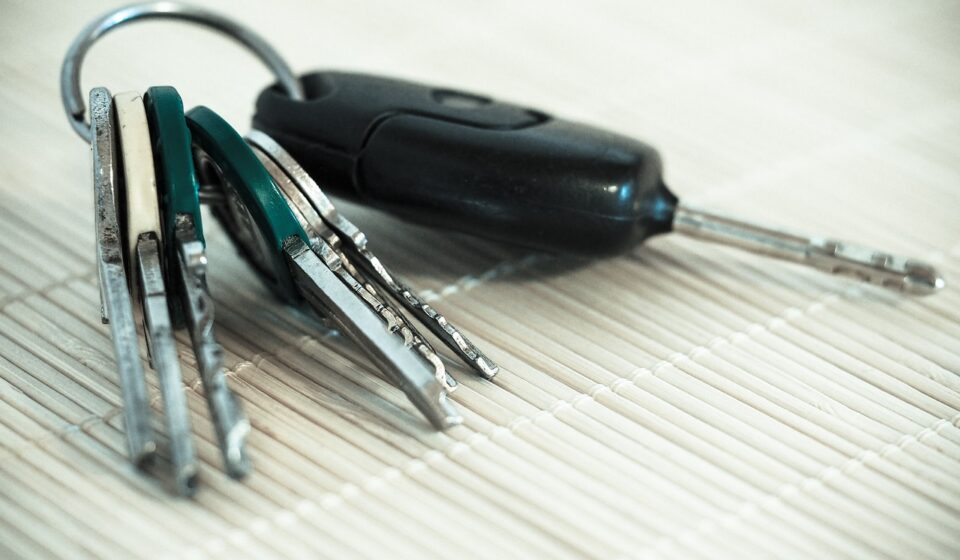
A Kwikset deadbolt with SmartKey is not, by itself, an electronic smart lock. In most product listings, SmartKey refers to Kwikset’s mechanical re-key technology. The cylinder can be reset to work with another compatible Kwikset KW1 key without removing the deadbolt from the door. That makes it useful for move-ins, lost keys, tenant turnover, remodeling work, and projects where several Kwikset locks need to operate with one key.
The engineering value is convenience, not a change in the entire door’s security level. SmartKey changes key control at the cylinder level. The security of the opening still depends on the deadbolt grade, door preparation, strike installation, frame strength, and local egress rules. For product engineers, installers, landlords, and homeowners, the practical question is not simply whether SmartKey is good. It is whether the selected deadbolt model, rating, and application match the door’s risk profile. You can also explore more in product engineering.
For more hardware selection notes and connected-device engineering coverage, see the product engineering section.
How SmartKey re-keying works in practice
SmartKey is built around a controlled re-keying sequence. Public Kwikset support material describes the basic process as using the current functioning key, turning it to a specified position, inserting the SmartKey learn tool, removing the old key, inserting the new compatible key, and rotating the cylinder to complete the reset. The key operational detail is that the current working key is normally required. SmartKey is therefore different from replacing or recovering a cylinder when the valid key is already lost.
That distinction matters in both residential and managed-property use. If an owner still has a valid key, a SmartKey deadbolt can reduce the time and cost involved in changing who has access. If the valid key is missing or the cylinder has been misprogrammed, the work may require recovery steps, manufacturer support, or a locksmith. Kwikset’s support guidance also warns that a SmartKey cylinder can be misprogrammed if the new key is not fully inserted, or if it is pushed, pulled, or moved while the cylinder is returned to its home position.
From a product design perspective, SmartKey moves a task traditionally handled by removing or repinning a cylinder into a user-accessible workflow. That benefit comes with a usability requirement: the instructions, learn tool, key compatibility, and error recovery path need to be understood before deployment. In a multi-unit setting, technicians should document which doors were re-keyed, which key is current, and whether the selected product is a standard residential SmartKey deadbolt or a dedicated key-control model.
What to compare before choosing a model
Kwikset sells several deadbolt families with SmartKey, and the same re-key technology can appear in products with different grades, forms, and installation requirements. A budget exterior door, a high-traffic rental entry, and a design-focused front entrance may call for different specifications. The comparison below summarizes public manufacturer specifications that are commonly relevant when evaluating a SmartKey deadbolt.
| Model family | Typical SmartKey use case | Published rating or positioning | Door and installation notes |
|---|---|---|---|
| 660 deadbolt | Cost-sensitive residential replacement or builder-grade exterior door | Kwikset sell-sheet material lists ANSI/BHMA Grade 3 certification for the 660 deadbolt | Common specifications include 2-1/8″ cross bore, 1″ edge bore, adjustable 2-3/8″ or 2-3/4″ backset, 1″ bolt throw, and standard 1-3/8″ to 1-3/4″ door thickness |
| 780 deadbolt | Step-up residential or single-/multi-family project where Grade 2 is preferred | Kwikset product material lists ANSI/BHMA Grade 2 security and SmartKey re-key technology | Public sell-sheet specifications include adjustable backset, 1″ bolt throw, standard 1-3/8″ to 1-3/4″ door thickness, and optional thicker-door support on some configurations |
| 980 deadbolt | Higher-security residential entry where the buyer wants a stronger listed residential rating in the Kwikset mechanical line | Kwikset’s current product page lists the 980 SmartKey deadbolt with BHMA AAA-style security, durability, and finish rating language | Manufacturer specifications list SmartKey, a keyed-one-side function, adjustable 2-3/8″ or 2-3/4″ latch backset, and standard 1-3/8″ to 1-3/4″ door thickness |
The table should not be read as a universal ranking for every door. A Grade 3 deadbolt may be adequate for a low-risk secondary application, while a Grade 2 or stronger-rated model may be more appropriate for a main entry, rental turnover, or higher-use door. The final specification also depends on whether the door is solid core, whether the jamb is reinforced, and whether the strike plate is properly anchored.
Security strengths and limits to understand
Kwikset’s public SmartKey material emphasizes resistance to common covert-entry methods such as picking and bumping, and describes SmartKey as using a side-locking bar rather than a conventional pin-and-tumbler-only design. These are manufacturer-stated security claims and are useful for understanding the product intent. They should not be treated as a guarantee that the entire door assembly will resist forced entry.
A deadbolt is only one component of the opening. A weak door edge, short strike screws, split jamb, hollow-core exterior door, poor alignment, or oversized bore can reduce the benefit of an upgraded cylinder. For this reason, a practical specification should include both the lock and the installation environment. The bolt should extend fully into the strike, the door should close without preload, and the strike should be secured into framing material, not only thin trim.
There is also a difference between re-key convenience and access governance. SmartKey makes it easier to change the operating key, but it does not provide audit logs, time-based access, remote unlock, credential revocation through software, or event history. If those capabilities are required, a keypad or connected smart lock may be more appropriate. Even then, many electronic Kwikset locks use a mechanical keyway as a backup, so SmartKey may still be part of the emergency-entry design.
Single-cylinder, double-cylinder, and code considerations
Most homeowners looking for a Kwikset deadbolt with SmartKey are considering a single-cylinder deadbolt: a key on the exterior and a thumbturn on the interior. Kwikset’s product-category material describes keyed-one-side deadbolts this way, and it is the most common residential configuration because occupants can leave without using a key.
Double-cylinder deadbolts, keyed on both sides, are sometimes considered for doors with nearby glass because an intruder cannot simply break the glass and turn an interior thumbturn. However, they introduce a life-safety issue: occupants may need a key to exit during a fire or other emergency. International code language for many egress contexts requires doors to be openable from the inside without a key, tool, or special knowledge, and local amendments can vary. For any exterior door that functions as an exit, verify the adopted code and local inspection expectations before specifying a double-cylinder product. See also: device architecture.
This is especially important for landlords, multifamily operators, and remodelers. A hardware choice that seems more secure against one attack path can create evacuation risk or compliance problems. In many residential projects, a single-cylinder deadbolt paired with stronger door reinforcement is the more balanced approach than moving to a key-required interior cylinder.
Where SmartKey fits in product engineering decisions
From an engineering standpoint, SmartKey is best understood as a maintainability feature. It reduces the friction of changing key access after occupancy changes, contractor handoff, lost keys, or household changes. That matters because lock replacement and locksmith scheduling are often operational pain points, not just hardware costs.
SmartKey also supports key consolidation within the compatible Kwikset keyway ecosystem. A homeowner can often align several compatible Kwikset locks to one key, provided each cylinder is properly re-keyed with a functioning key and the learn tool. In product terms, this is a usability benefit: fewer keys, easier turnover, and lower perceived maintenance burden.
The trade-off is that SmartKey should be specified with clear boundaries. It is not a substitute for a restricted keyway system where unauthorized key duplication control is required. It is not the same as an enterprise master-key platform. It also does not solve identity management the way electronic access control does. For professional or multi-family projects, standard SmartKey products should be compared with Kwikset key-control products or commercial-grade access systems before final selection.
For smart-hardware teams, the lesson is broader than one brand. Mechanical serviceability still matters in connected and non-connected door hardware. A deadbolt that can be re-keyed quickly may lower support costs and improve user satisfaction, but only if the product documentation, key compatibility, and failure recovery path are clear enough for real users.
Practical checklist before installation
- Confirm the door function. Decide whether the door needs keyed-one-side, keyed-both-sides, or one-sided operation, and check egress requirements before choosing keyed-both-sides hardware.
- Check the grade and product family. Do not assume every Kwikset deadbolt with SmartKey has the same rating. Compare 660, 780, 980, and other families by published specification.
- Verify door preparation. Measure bore size, edge bore, backset, door thickness, and latch face requirements before purchase.
- Plan the re-key sequence. Keep the functioning key and SmartKey learn tool available. If the current key is missing, plan for locksmith or manufacturer-supported recovery.
- Test after re-keying. Test the new key with the door open first, confirm smooth bolt travel, and make sure the key does not pull out in the wrong position.
- Reinforce the opening where needed. Long strike screws, a sound jamb, and a properly aligned bolt often matter as much as the cylinder technology.
Frequently asked questions
Is SmartKey the same as a smart lock?
No. SmartKey is a mechanical re-key technology used in many Kwikset keyed products. A smart lock is an electronic device that may include a keypad, app control, wireless connectivity, or access logs. Some electronic locks may also include a SmartKey mechanical backup cylinder.
Can a Kwikset SmartKey deadbolt be re-keyed to any key?
It is designed for compatible Kwikset KW1 keyway keys, not every key on the market. The normal re-keying process also requires the current functioning key and the SmartKey learn tool.
Which Kwikset SmartKey deadbolt should I choose?
For a basic cost-sensitive residential application, the 660 family may fit. For a step-up residential or multi-family project, compare the 780 family. For a higher listed residential rating within the mechanical Kwikset line, review the 980 family. Always confirm the current product page, finish, function, and door specifications before buying.
Does SmartKey improve forced-entry resistance?
SmartKey is promoted by the manufacturer for resistance to picking and bumping, but forced-entry resistance depends on the full door assembly. Door construction, strike anchoring, frame condition, and installation quality remain critical.
Can landlords use SmartKey for tenant turnover?
Yes, SmartKey can make turnover re-keying faster when the functioning key is available. However, landlords who need separate property-manager and tenant access should evaluate dedicated key-control products rather than assuming a standard SmartKey deadbolt provides a master-key system.