Radar modules for smart hardware and presence sensing applications
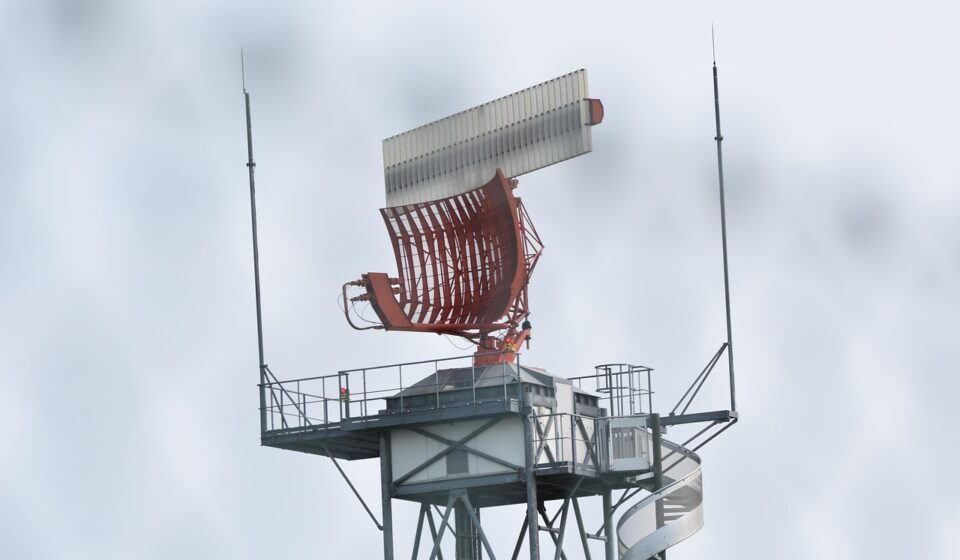
Radar modules are compact radio-frequency sensing assemblies used in smart hardware to detect motion, distance, direction and, in some designs, subtle human presence without a camera. They are increasingly used in occupancy sensors, smart lighting, access devices, robotics, industrial safety systems and in-cabin vehicle sensing. The main design question is not whether radar is generally “better” than PIR, ultrasonic or camera sensing. It is whether a specific radar frequency, antenna layout, firmware output and compliance path match the product’s range, privacy, power and integration requirements.
For most embedded products, radar modules matter because they reduce the RF design burden. A module can combine the radar chip, antenna, clocking, power circuitry and firmware in a package that is easier to evaluate than a bare mmWave transceiver. That convenience still comes with tradeoffs in configurability, enclosure design, certification, cost and access to raw data.
What radar modules do in embedded systems
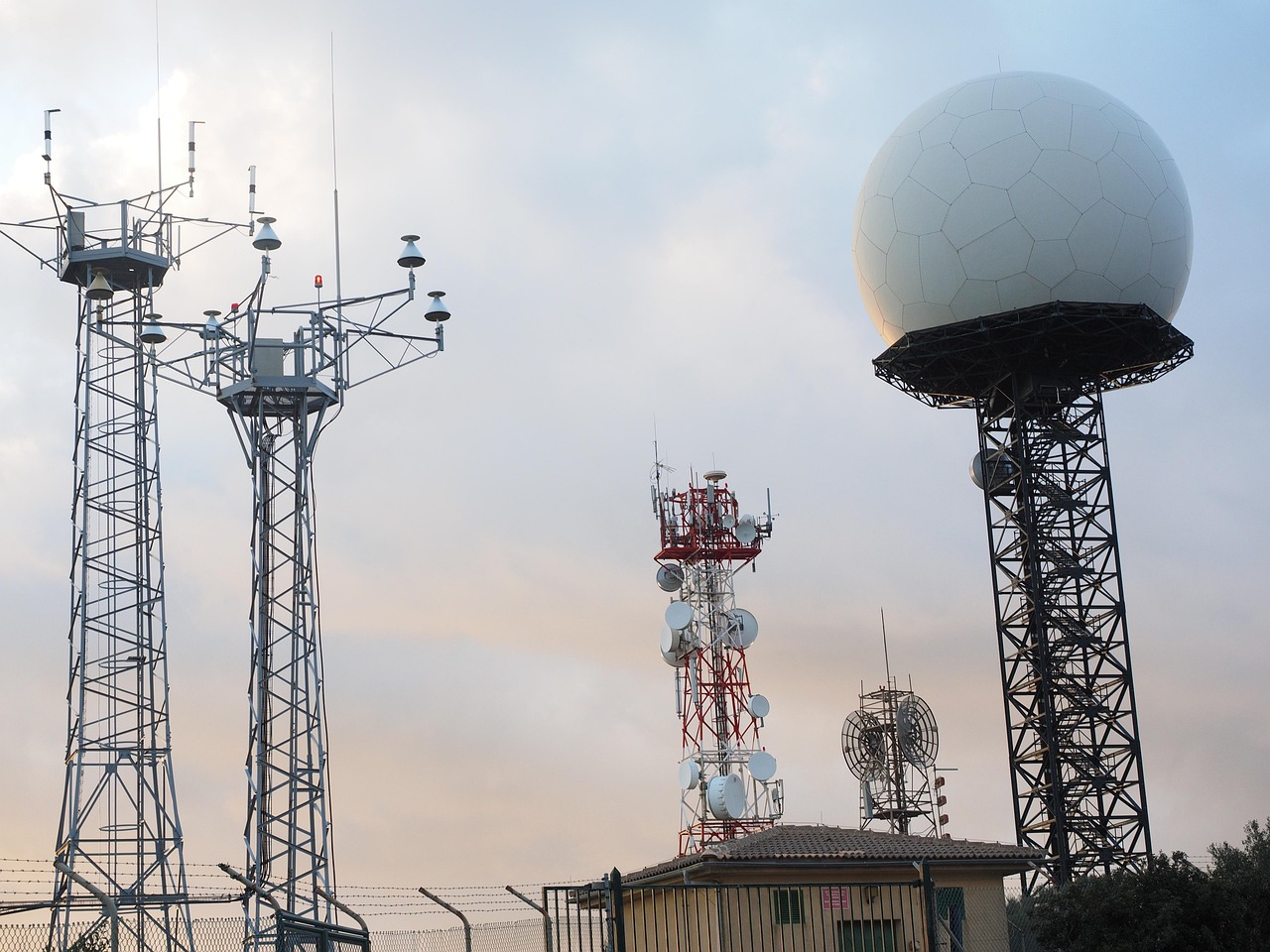
A radar module transmits radio waves and analyzes reflections from people, objects or surfaces. In a typical frequency-modulated continuous wave design, the module estimates range by comparing transmitted and received signals, estimates movement from Doppler changes and may estimate angle using multiple antennas. The output depends on the product class. Some modules expose only a simple presence signal over GPIO or UART, while more advanced modules provide target lists, point clouds, velocity, zone information or raw intermediate data for external processing.
This is why the term “radar module” can describe very different parts. A simple presence module for a smart lamp may be designed around low power and straightforward configuration. A robotics or industrial module may prioritize field of view, target tracking, latency and access to richer data. Automotive radar modules usually face stricter functional, environmental and regulatory expectations than indoor consumer sensors.
Radar also differs from optical sensing in an important way: it does not need visible light. It can work in darkness and can be hidden behind many plastic covers when the material and thickness are suitable for the operating frequency. At the same time, radar is not magic. Metal objects, multipath reflections, enclosure losses, installation height and firmware filtering can all affect real-world performance.
Why 60 GHz and 77 GHz modules are gaining attention
Commercial radar modules commonly appear around 24 GHz, 60 GHz and 77 GHz to 81 GHz, depending on region, application and regulatory route. A higher frequency means a shorter wavelength: about 12.5 mm at 24 GHz, about 5 mm at 60 GHz and about 3.9 mm at 77 GHz. Shorter wavelength supports compact antenna design, which is one reason mmWave radar fits into smaller smart devices.
| Band commonly seen in modules | Typical fit | Practical design notes |
|---|---|---|
| 24 GHz | Basic motion sensing and some industrial short-range uses | Often familiar to designers, but available spectrum and allowed use vary by region and application. |
| 60 GHz | Indoor presence sensing, smart home devices, occupancy analytics and short-range detection | Compact antennas, privacy-friendly sensing and a growing vendor ecosystem make it attractive for smart hardware. |
| 77 GHz to 81 GHz | Automotive and higher-resolution sensing designs | Used where fine range resolution, velocity estimation and automotive-grade development ecosystems matter. |
Recent vendor documentation from Texas Instruments and Infineon shows why 60 GHz has become especially visible in smart hardware. TI lists 60 GHz and 77 GHz mmWave devices for industrial and automotive applications, including compact 60 GHz module options for motion and presence detection. Infineon’s 60 GHz radar materials describe use cases such as smart lighting, thermostats, appliances, speakers, door locks and surveillance devices. These are vendor claims and application examples, not a guarantee that any module will perform well in every enclosure or room layout.
Regulation is also part of the shift. In the United States, the FCC published rule changes in the Federal Register on July 24, 2023, expanding opportunities for unlicensed field disturbance sensors such as short-range radars in the 57 GHz to 71 GHz band. In Europe, ETSI EN 305 550 and related work cover short-range radio equipment in higher-frequency ranges, including radiodetermination applications. These references do not remove the need for product-level compliance work, but they show that radar modules operate within a defined radio regulatory framework rather than a purely experimental space.
Where radar modules add value over PIR, ultrasonic and cameras
The strongest case for radar modules is not broad object recognition. It is reliable detection of motion, occupancy and distance-related events in conditions where other sensors have weaknesses.
- Presence sensing: PIR sensors react to changes in infrared radiation and may miss a person sitting still. A well-tuned mmWave radar module can detect small body movements such as breathing or slight posture changes, although this depends heavily on algorithm design and the surrounding environment.
- Privacy-sensitive spaces: Radar does not produce a recognizable image. That makes it attractive for bathrooms, bedrooms, offices and care spaces where a camera would be intrusive.
- Hidden industrial design: Radar can often sit behind a non-metallic cover, allowing cleaner product design than exposed optical sensors.
- Low-light operation: Radar does not require daylight or infrared illumination, so detection is possible at night or inside enclosed equipment.
- Velocity and range awareness: Compared with a binary motion sensor, radar can support richer logic such as approach detection, zone-based triggers and target tracking.
However, radar is not always the simplest answer. PIR remains inexpensive and power efficient for basic motion-triggered lighting. Ultrasonic sensors can be useful for straightforward distance measurement at lower cost. Cameras remain better when classification, identity, gesture recognition or scene understanding are required. In many finished products, radar works best as part of a sensor mix rather than as the only input.
How to choose a radar module for a smart device
The first selection step is to define the event the product must detect. “Presence” is not specific enough. A ceiling sensor for room occupancy, a wall-mounted light switch, a robot obstacle sensor and an in-cabin child presence system all have different range, angle and false-trigger requirements. Engineers should specify the detection zone, expected target size, mounting position, latency, update rate and acceptable false positive behavior before comparing module datasheets.
Check the output level before the price
Low-cost radar modules often provide processed results only, such as motion, presence, distance bin or a few configurable zones. That is useful when the application is simple and time-to-market matters. It can be limiting when the product needs custom tracking, filtering or sensor fusion. If the design requires raw ADC data, point clouds or detailed target information, confirm that the module and software license actually expose those outputs.
Match the antenna pattern to the installation
Field of view is not just a datasheet number. A wide pattern may be good for room coverage but problematic near moving fans, curtains or doorways. A narrow pattern may reduce false triggers but create blind zones. Wall, ceiling and corner installations can produce different multipath reflections, so evaluation should be done in the intended mechanical position, not only on a lab bench.
Review power modes and startup behavior
Battery-powered devices need more than a low average current figure. They need predictable wake intervals, stable detection after wake-up and clear behavior when the target is already present before the module becomes active. A wired thermostat or smart speaker can usually support more continuous sensing than a coin-cell device, but thermal design and standby regulations may still matter.
Validate enclosure materials early
Plastic thickness, fillers, paint, coatings, seams and nearby metal can change radar performance. A prototype that works without an enclosure may lose range or create false reflections after the industrial design is finalized. For mmWave modules, the radome area should be treated as an RF design feature, not as a cosmetic afterthought. See also: device architecture.
For related component coverage, see the sensors and modules section.
Integration risks that are easy to underestimate
Radar modules simplify RF development, but they do not eliminate system engineering. One common issue is false detection from non-human motion. Fans, moving curtains, vibration, pets, machinery and reflections from doors can trigger presence or motion logic if the firmware is not tuned to the environment. Another issue is missed detection at the edge of the field of view, especially when a person is still, partially blocked or close to a reflective surface.
Firmware abstraction is another tradeoff. A module with built-in algorithms can shorten development, but it can also hide the signal-processing chain. If the product roadmap includes advanced classification, multi-person tracking or custom filtering, a closed module may become restrictive. Developers should ask whether parameters such as detection threshold, range gates, tracking zones, sensitivity, hold time and exclusion regions are adjustable.
Radio compliance should also be planned from the start. A pre-certified module may reduce testing work, but final product approval can still depend on antenna integration, enclosure, host electronics, labeling and regional operating rules. The FCC and ETSI examples above show that radar operation is regulated by frequency band and device class; they should not be read as universal permission for every design or country.
Finally, the user experience needs careful tuning. Presence sensors that keep lights on too long waste energy. Sensors that switch off while someone is reading create frustration. Occupancy analytics that are too sensitive may overcount. A good radar design balances technical detection with the behavior people expect from the finished product.
A practical evaluation checklist
Before committing to a radar module, engineering teams should run repeatable tests instead of relying only on headline range claims. A useful evaluation plan includes both controlled measurements and realistic use cases.
- Define the required detection zone in meters and degrees, including blind spots that are acceptable or unacceptable.
- Test seated, standing, walking, approaching and departing people rather than only walking motion.
- Measure false triggers from fans, doors, curtains, HVAC airflow, pets or equipment vibration.
- Evaluate the module behind the real enclosure material and with the intended mounting hardware.
- Confirm available interfaces, output formats, firmware update method and parameter controls.
- Check operating temperature, supply voltage tolerance, boot time and recovery after power interruptions.
- Review the regulatory route for each target market before changing antenna, enclosure or firmware settings.
- Compare the total system cost, including certification, tuning time and mechanical changes, not only the module price.
The best module for one device may be the wrong choice for another. A smart light switch may value a simple UART presence output and low standby power. A service robot may need target position updates and a wider integration interface. A vehicle sensing design may require automotive-grade documentation and a very different validation plan.
Frequently asked questions
Are radar modules the same as mmWave sensors?
Not always. A mmWave sensor usually refers to the radar chip or sensing technology operating at millimeter-wave frequencies. A radar module may include the chip, antenna, supporting electronics, firmware and a host interface. In product development, the module is often easier to integrate, while the bare sensor gives more design control.
Can radar modules detect a person who is not moving?
Some mmWave radar modules can detect subtle human micro-motion, but performance depends on the antenna, signal processing, placement and environment. It is safer to treat “static presence” as a feature that must be verified in the exact use case, not as a default property of all radar modules.
Do radar modules work through walls?
They may pass through some non-metallic materials, but consumer and industrial modules are normally designed for defined short-range sensing zones, not for dependable wall-penetrating detection. Walls, metal, glass, insulation and furniture can attenuate or reflect signals in unpredictable ways.
Is 60 GHz better than 24 GHz for smart home products?
60 GHz can support compact antennas and detailed short-range sensing, which is why it appears often in newer presence modules. That does not make it automatically better. Cost, power, regional regulations, firmware quality, enclosure design and the required sensing distance all matter.
Can a radar module replace a camera?
It can replace a camera for some presence, motion and distance-triggering tasks, especially where privacy matters. It cannot replace a camera when the product needs images, visual identification, object recognition or detailed scene interpretation.