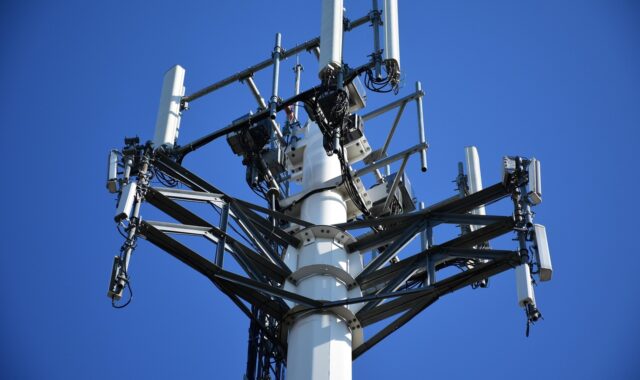
Wireless network design for smart hardware in the Wi-Fi 7 era

What makes a wireless network different for smart hardware
A wireless network for smart hardware is not simply a faster version of a home or office Wi-Fi setup. It has to support many device types, uneven traffic, low-power endpoints, firmware updates, roaming clients, security segmentation and long product lifecycles. Wi-Fi 7 and wider 6 GHz availability change the planning discussion, but they do not remove older constraints such as 2.4 GHz range, interference, device certification and local spectrum rules. For smart hardware teams, the practical task is to match each device class to the right wireless layer instead of forcing every sensor, camera, gateway and controller into one network design.
This distinction matters because smart hardware deployments often mix high-bandwidth devices, such as cameras and edge displays, with low-data devices, such as sensors, locks, meters and controllers. A laptop-heavy network is usually judged by download speed and coverage. A smart hardware wireless network is judged by predictable connectivity, low support cost, safe provisioning, update reliability and the ability to keep operating when the radio environment becomes crowded.
For more coverage of smart hardware connectivity topics, visit yingguoguo.com.
The standards and spectrum changes shaping wireless networks
The most visible change in Wi-Fi is the move from Wi-Fi 6 and Wi-Fi 6E toward Wi-Fi 7. The Wi-Fi Alliance introduced Wi-Fi CERTIFIED 7 on January 8, 2024, describing the certification program as a way to improve interoperability for Wi-Fi 7 devices. IEEE materials identify IEEE 802.11be as the Extremely High Throughput amendment behind Wi-Fi 7. These are important milestones, but they do not mean every installed device immediately gains Wi-Fi 7 performance.
Wi-Fi 7 matters for wireless network planning because it adds features intended to improve throughput, latency and link flexibility. The most discussed features include 320 MHz channels where 6 GHz spectrum is available, 4096-QAM under strong signal conditions and multi-link operation, often called MLO. MLO is especially relevant because it can allow compatible devices to use more than one band or channel relationship more intelligently than earlier generations. In practice, the benefit depends on access point support, client support, radio conditions, regional rules and firmware maturity.
The 6 GHz band is another major planning factor. In the United States, the Federal Communications Commission opened parts of the 6 GHz band for unlicensed use and created conditions for low-power indoor operation and standard-power operation using automated frequency coordination. That regulatory structure helps explain why 6 GHz can improve capacity while still requiring careful device classification and regional compliance review. Europe, the United Kingdom and other markets have their own rules, so a global smart hardware product cannot assume identical channel availability everywhere.
Older standards still matter for devices that use 2.4 GHz. The 2.4 GHz band remains important because of its range and broad device compatibility. Standards and regulatory frameworks such as ETSI EN 300 328 in Europe shape how wideband data transmission equipment can operate in that band. The takeaway is straightforward: modern wireless network design is now multi-generation and multi-band by default.
Speed is not the main design goal for most smart hardware
Wi-Fi marketing often focuses on peak data rates, but smart hardware usually needs consistency more than maximum throughput. A security camera may need sustained upstream capacity. A medical or industrial monitor may need low packet loss. A smart lock may need reliable wake-up and authentication with very little battery drain. A voice device may need stable latency. These requirements are different, and they should not be treated as one generic connectivity target.
A useful planning approach is to divide devices by traffic profile:
- High-throughput devices: cameras, displays, AR terminals, media hubs and edge gateways may benefit from 5 GHz or 6 GHz capacity, stronger backhaul and Wi-Fi 6E or Wi-Fi 7 support.
- Latency-sensitive devices: controllers, voice interfaces and interactive devices need stable airtime, good signal quality and predictable roaming more than peak speed.
- Low-power endpoints: sensors, locks, tags and meters often prioritize battery life, sleep behavior and simple reconnection over wide channels.
- Infrastructure devices: gateways, bridges and hubs should be placed where they reduce radio contention rather than add another weak wireless hop.
This segmentation helps avoid a common mistake: upgrading the router while leaving the device mix, channel plan, backhaul and provisioning model unchanged. A Wi-Fi 7 access point can help capable devices, but it cannot make a noisy 2.4 GHz environment quiet or turn an uncertified client into a reliable one.
How to choose bands for a smarter wireless network
Band selection is one of the most important decisions in smart hardware connectivity. The best choice is not always the newest band. Each band has trade-offs in range, capacity, device compatibility and regulatory complexity.
| Band or layer | Strength | Limitation | Typical smart hardware fit |
|---|---|---|---|
| 2.4 GHz Wi-Fi | Longer range and broad compatibility | More congestion and fewer non-overlapping channels | Simple sensors, legacy devices and low-bandwidth controls |
| 5 GHz Wi-Fi | Good balance of capacity and maturity | Shorter range than 2.4 GHz and possible congestion in dense sites | Cameras, hubs, appliances and general smart devices |
| 6 GHz Wi-Fi | More capacity and cleaner spectrum where available | Regional availability, device support and range constraints | High-throughput gateways, premium cameras, displays and newer clients |
| Thread, Bluetooth LE or other low-power protocols | Power efficiency and purpose-built device behavior | Requires gateways, border routers or application-layer integration | Battery sensors, switches, tags and simple controls |
For many deployments, the best wireless network is hybrid. Wi-Fi handles broadband IP traffic. Low-power mesh or short-range protocols handle sensors and controls. Ethernet handles backhaul where reliability is critical. This reduces the number of devices competing for the same Wi-Fi airtime and gives each class of hardware a more suitable communication path.
Channel width also needs careful treatment. Wider channels can increase throughput, but they require clean spectrum and compatible devices. A 320 MHz Wi-Fi 7 channel may be useful for a capable client close to an access point in a market where 6 GHz rules allow it. It is not a universal setting for every deployment. In dense environments, narrower channels can sometimes produce a more stable network because more access points can reuse spectrum with less overlap.
Security and provisioning deserve early design attention
Smart hardware often stays in service for years, sometimes longer than phones and laptops. That makes wireless network security a lifecycle issue, not a one-time setup task. A secure deployment should consider authentication, encryption, device identity, update delivery, decommissioning and recovery from lost credentials.
WPA3 remains an important security baseline for modern Wi-Fi devices, and Wi-Fi Alliance certification programs help manufacturers signal interoperability and security feature support. However, certification alone is not a complete security model. Network operators still need segmentation, strong onboarding practices, secure firmware delivery and a process for removing devices that are sold, retired or compromised.
For smart hardware networks, segmentation is often the most practical improvement. Cameras, guest devices, building controls and administrative systems should not automatically share the same trust level. In homes, this may mean using a separate IoT network where the router supports it. In commercial sites, it may mean VLANs, role-based access control and monitoring. The goal is to limit what a compromised or poorly maintained device can reach.
Provisioning is another weak point. Many support problems begin during onboarding, when a device is trying to join a network with limited interface options. Designs that depend on temporary access points, QR codes, mobile apps or Bluetooth-assisted setup should be tested under realistic conditions, including weak signal, failed passwords, captive portals and device resets. A strong wireless network plan covers not only radio coverage but also the full first-join and recovery experience.
A practical framework for planning smart hardware networks
A reliable wireless network starts with device inventory, not access point selection. Before choosing hardware or bands, define what each device needs to do, how often it communicates, how much data it moves and what happens if it disconnects. This turns connectivity planning from guesswork into a set of engineering trade-offs.
| Planning question | Why it matters | Design implication |
|---|---|---|
| How many devices will be active at the same time? | Wireless capacity is shared, and idle devices still create management traffic. | Plan for device density, not only floor area. |
| Which devices need low latency? | Interactive controls and voice features can fail even when speed tests look good. | Prioritize signal quality, airtime management and roaming behavior. |
| Which devices need long battery life? | Frequent wake-ups and retries drain batteries. | Use suitable low-power protocols or optimize Wi-Fi sleep behavior. |
| What must keep working during an internet outage? | Some smart hardware should continue local control even when cloud access fails. | Design local fallback paths and avoid unnecessary cloud-only dependencies. |
| Which regions will the product or deployment serve? | Spectrum, transmit power and certification rules vary by market. | Validate radio settings and compliance per target region. |
Site surveys are also important, but they should measure more than signal strength. Useful checks include channel utilization, neighboring networks, interference sources, roaming performance, packet loss, backhaul quality and the performance of the weakest supported client. A modern access point can look excellent in a dashboard while a small battery device at the edge of coverage repeatedly disconnects.
Common mistakes that weaken wireless network performance
The first mistake is treating coverage as the same thing as capacity. A device may show a connected signal but still perform poorly if the channel is crowded or if too many clients are contending for airtime. This is common in apartment buildings, retail spaces, schools and smart homes with many low-cost devices.
The second mistake is overusing mesh without considering backhaul. Wireless mesh can be convenient, but every wireless hop consumes airtime unless there is a dedicated or high-quality backhaul path. For cameras, gateways and other high-traffic devices, wired Ethernet backhaul is often a better investment than adding another wireless extender.
The third mistake is ignoring older clients. A network that supports legacy devices may need settings that reduce the efficiency of newer devices. That does not mean every older device must be removed immediately, but it does mean lifecycle planning matters. If a device cannot support current security or stable connectivity, it may create operational risk that is larger than its replacement cost.
The fourth mistake is assuming Wi-Fi 7 automatically solves interference. Wi-Fi 7 adds important capabilities, but radio physics, building materials, antenna design and local spectrum congestion still matter. A careful channel plan, sensible access point placement and realistic client testing remain essential.
What this means for product and deployment teams
For product teams, wireless network compatibility should be considered during hardware design, not only at launch. Antenna placement, enclosure materials, power management, certification targets and onboarding flows all affect real-world performance. A device with a strong chipset can still disappoint users if the antenna is compromised by the enclosure or if setup fails on common router configurations.
For deployment teams, the shift toward Wi-Fi 7 and 6 GHz creates an opportunity to separate traffic more intelligently. High-throughput clients can move to cleaner bands where available, while low-power and legacy devices can remain on bands that match their needs. The strongest designs do not chase one universal wireless layer. They use multiple layers intentionally and document how each device should connect.
For buyers, the practical advice is to look beyond the logo on the box. Ask whether the device is certified for the features it claims, whether it supports the bands used in the target region, whether it can receive secure updates and whether it has a recovery path if onboarding fails. These details often determine whether a smart hardware deployment remains stable after the first month.
Frequently asked questions
Is Wi-Fi 7 necessary for every smart hardware device?
No. Wi-Fi 7 can be valuable for high-throughput and latency-sensitive devices, especially where 6 GHz spectrum is available, but many sensors and simple controllers do not need it. For those devices, range, power consumption, stable reconnection and security support may matter more than peak speed.
Should smart devices use a separate wireless network?
In many homes and commercial environments, yes. A separate IoT or smart hardware network can reduce security exposure and make troubleshooting easier. The best setup depends on router features, device requirements and whether devices need to communicate with phones, hubs or local controllers.
Does 6 GHz replace 2.4 GHz for smart hardware?
No. The 6 GHz band adds useful capacity for compatible devices, but 2.4 GHz remains important for range and broad compatibility. Many smart hardware deployments will continue to use 2.4 GHz, 5 GHz and 6 GHz together, with each band assigned to the device classes it serves best.
What is the most important first step in improving a wireless network?
Start with an inventory of devices and traffic needs. Count active devices, identify high-throughput and low-power endpoints, check which bands they support and look for weak links such as poor backhaul or crowded channels. Upgrading access points is easier to justify once the actual bottleneck is known.