
Keyless entry locks for gates and the architecture choices behind them

What keyless gate access actually needs to solve
Keyless entry locks for gates have to answer a practical access question: who is allowed through an outdoor boundary, when, and under what conditions? The best choice is rarely the device with the most app features. It is the design that matches the credential method, lock hardware, power source, safety obligations, and maintenance model to the way the gate is used. A pedestrian garden gate, a community pool gate, a multifamily entrance, and a motorized vehicle gate all call for different architectures.
For readers following broader device architecture trends, gate access is a useful case because it combines physical security, electromechanical design, wireless connectivity, and safety compliance in one exposed outdoor system. A lock can fail because the code policy is weak, but it can also fail because rain reaches the electronics, the latch is misaligned, batteries are neglected, or an automatic gate is treated like an ordinary door.
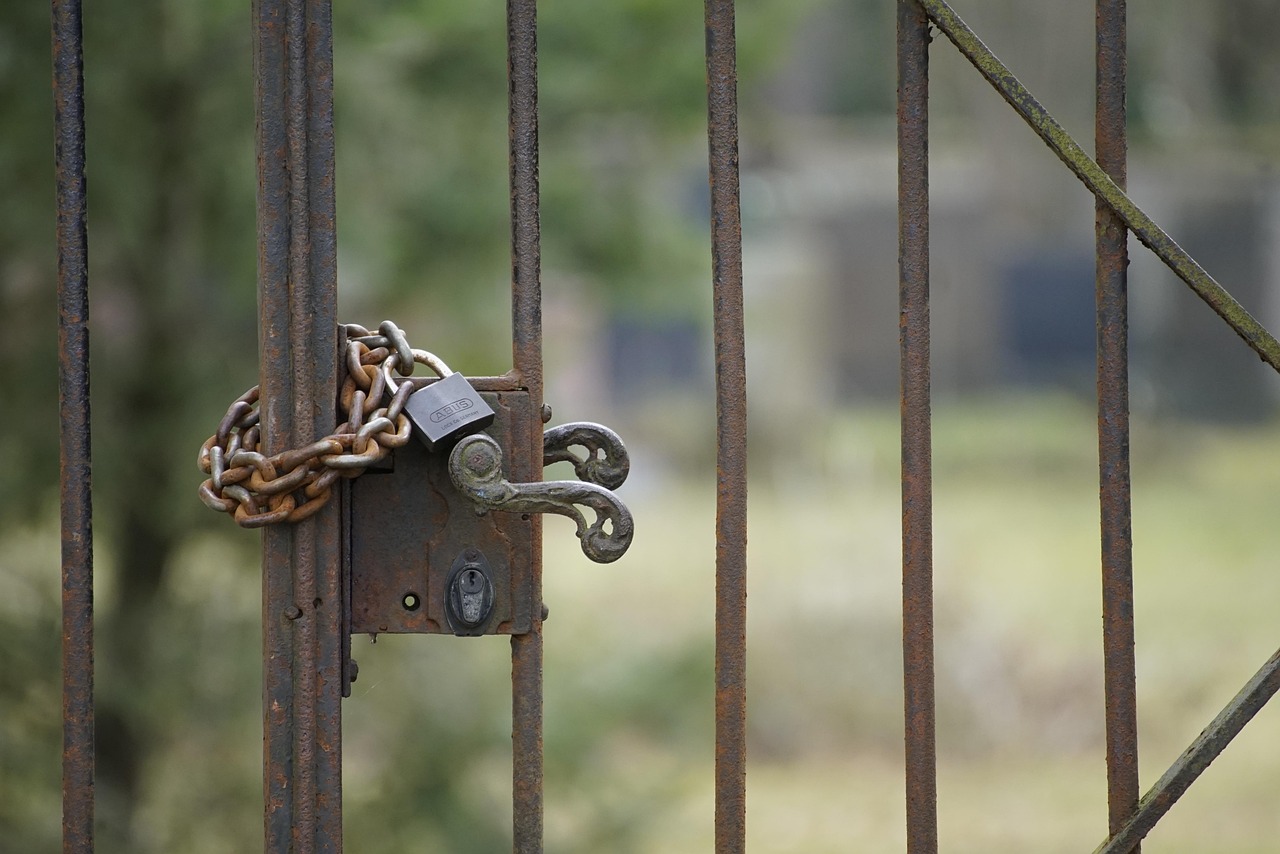
A practical design starts by separating three layers: the gate structure, the locking or operating hardware, and the access control method. Once those layers are clear, it is easier to compare keypad locks, card readers, smart locks, intercom relays, electric strikes, magnetic locks, and gate operator controls without confusing convenience with security.
The main types of keyless entry locks for gates
The word lock is used loosely in gate projects. Sometimes it means a self-contained keypad latch on a pedestrian gate. Sometimes it means a controller that tells a vehicle gate operator to open. In other projects, it means an electric strike or magnetic lock connected to a larger access control platform. The right category depends first on whether people are walking through the gate, vehicles are moving through it, or both.
Mechanical keypad locks
Mechanical keypad locks use buttons or wheels and do not require batteries, wiring, Wi-Fi, or a cloud account. They are attractive for simple pedestrian gates where occasional access is needed and audit logs are not important. Their main limitation is credential control. A shared code can be photographed, guessed, overheard, or forgotten, and changing it usually requires someone to visit the lock. They are also a poor fit when different users need different schedules.
Standalone electronic keypad locks
Standalone electronic keypad locks add powered electronics while keeping most of the intelligence at the gate. Many can support multiple PINs, temporary codes, or automatic relocking. The architecture is straightforward: keypad, controller, lock body, and battery or low-voltage power. This model fits small sites that need more control than a mechanical keypad but do not want a full access control system. The trade-off is administration. If codes are changed locally, every update still depends on someone with physical or app access to the unit.
RFID, card, and fob readers
Card and fob systems work well when users should not have to memorize a shared code. They are common in commercial, multifamily, and staff-access environments because credentials can be issued, suspended, and replaced. The reader may sit on the gate post, while the controller and power supply are protected in a box or nearby building. For higher-risk sites, the reader should not be the only decision-making device; a separate controller reduces the chance that tampering with the reader directly releases the lock.
Mobile app and wireless smart locks
Mobile access can use Bluetooth, Wi-Fi, cellular, or a bridge connected to another network. It is convenient for remote code management, event history, and temporary visitor access. It also brings software support, account security, firmware updates, and network reliability into the gate design. A smart lock with a weak update policy may be less suitable than a simpler keypad in a remote outdoor location. Buyers should check how the device handles lost phones, account recovery, offline operation, and support after the product is discontinued.
Access control relays for automatic gates
For motorized vehicle gates, the access device often does not unlock a latch. Instead, it sends a dry-contact signal or command to a gate operator. That makes safety and operator listing more important than the keypad brand. ASTM International’s F2200 standard addresses automated vehicular gate construction, including different gate types such as sliding, swinging, vertical lift, vertical pivot, and overhead pivot gates. UL 325 is widely used for gate operator safety, including entrapment protection. In plain terms, a vehicle gate is a moving machine, not only an entry point.
A practical architecture for gate access systems
A reliable keyless gate design works like a chain. If one link is weak, the system becomes inconvenient, unreliable, or unsafe. The chain usually includes the credential, reader, controller, lock or operator, power system, sensors, enclosure, and management interface.
| Layer | Typical components | Design question |
|---|---|---|
| Credential | PIN, card, fob, phone, intercom approval | Can access be granted, changed, and revoked cleanly? |
| Reader or input | Keypad, RFID reader, mobile receiver, call box | Is it weather-rated and placed where users do not reach through the gate? |
| Controller | Local controller, cloud-connected hub, gate operator board | Where is the access decision made, and is the controller protected from tampering? |
| Locking hardware | Latch, electric strike, maglock, electromechanical lock, gate operator input | Should it fail secure, fail safe, or follow a code-required release sequence? |
| Power | Batteries, low-voltage transformer, solar, backup battery | What happens during an outage or low-battery condition? |
| Management | Local programming, app, web dashboard, access control platform | Who manages users, schedules, logs, and updates? |
This layered view helps prevent a common mistake: choosing the access method before understanding the gate. A heavy outdoor gate with poor alignment can overload a latch. A metal enclosure can reduce wireless range. A gate near a public sidewalk may need a different mounting position than a private garden gate. A pool or emergency egress route may have legal requirements that outweigh convenience.
For most sites, the controller should be placed in a protected location, with only the keypad or reader exposed. Cables should be protected in conduit where practical, and enclosures should be selected for the actual outdoor exposure. If the gate is far from a building, power and connectivity need early planning rather than being treated as accessories.
Credential choices and their real trade-offs
PIN codes are easy to deploy, but they are also easy to share. They work best when codes are unique per user, temporary codes can expire, and the system limits repeated failed attempts. A single permanent shared code is convenient at first, but it becomes difficult to retire once contractors, former tenants, guests, or delivery users have learned it.
Cards and fobs shift the problem from memory to possession. They are easier to revoke than a shared code, but they can be lost, loaned, or copied depending on the credential technology. For business or multifamily settings, cards and fobs are often more manageable than PIN-only systems because each user can be tracked independently.
Mobile credentials add flexibility but depend on phones, batteries, apps, wireless radios, and account security. They are useful when remote administration matters, such as granting a short-term visitor credential or disabling access without visiting the site. They are less attractive where users may not carry smartphones, cellular coverage is poor, or the site needs long-term operation with minimal software dependence.
Biometric readers can reduce credential sharing, but they require extra caution outdoors. Dirt, gloves, wet fingers, direct sun, and privacy expectations can all affect the user experience. For many gate applications, biometrics are better treated as a specialized option than as a default upgrade.
Intercom-based release is still valuable when human approval is part of the workflow. In this design, the person at the gate calls a resident, guard, or office, and the authorized person triggers release. This is not purely lock intelligence; it is an access workflow. It works best when paired with clear visitor policies and fallback procedures for network outages.
Power, weather, and mechanical fit matter as much as software
Outdoor gate locks operate in a harsher environment than most interior smart locks. Rain, heat, freezing temperatures, dust, insects, vibration, and gate movement can all shorten product life. Weather resistance should be checked at the component level, not assumed from marketing language. The keypad, reader, enclosure, connectors, lock body, and power supply all need to fit the installation environment.
Battery-powered locks are simple to install, but they create a maintenance obligation. The design should answer three questions before purchase: how low-battery warnings are delivered, how long the lock is expected to operate under realistic traffic, and how authorized users enter if the battery is depleted. For low-traffic residential gates, batteries may be acceptable. For high-traffic sites, wired low-voltage power with backup is often more predictable. See also: embedded platforms.
Solar can help remote gates, especially where trenching power is expensive, but it is not a universal fix. The panel must receive reliable sunlight, the battery must be sized for cloudy periods, and the lock or operator load must be understood. A motorized gate operator has a very different power profile from a low-current keypad reader.
Mechanical fit is just as important. Gates sag, posts move, latches fall out of alignment, and wind can push a gate against the strike. A lock selected with an interior-door mindset may not tolerate the gap, movement, or slam force of a gate. Before choosing electronics, inspect hinge condition, latch alignment, post rigidity, gate material, and the direction of swing or slide. A modest lock on a stable gate may perform better than an expensive smart device on a poorly aligned one.
Safety, standards, and code issues to check before installation
Keyless access should not create a life-safety problem. This is especially important for automatic vehicular gates, pool barriers, multifamily entrances, schools, workplaces, and any route used for emergency egress. Local adoption of building and fire codes varies, so the installer or property owner should confirm requirements with the authority having jurisdiction rather than relying only on product descriptions.
UL Standards & Engagement lists UL 325 for door, gate, louver, drapery, and window operators and systems, and its September 15, 2025 revision summary includes updates related to battery-powered applications, gate warning sign placards, and pedestrian gates and gate operators. UL Solutions also describes UL 294 as a standard for access control system units, including aspects such as security-related safety, digital security, performance, communication line security, endurance, and standby power levels.
For vehicle gates, ASTM F2200 provides a framework for automated vehicular gate construction and divides gates into classes, including residential, commercial, industrial, and guarded industrial contexts. The point for buyers is not to memorize every standard number. The point is to avoid treating an access keypad as separate from the gate system. If the gate moves automatically, the operator, sensors, controls, mounting, signage, and construction all affect safety.
Fail-safe and fail-secure behavior should be decided carefully. A fail-secure lock stays locked when power is lost, which may protect property but can create exit problems if used in the wrong location. A fail-safe lock releases when power is lost, which may support egress but can reduce perimeter security. Fire alarm release, emergency responder access, pool barrier rules, and accessible operation may change the correct answer. For sensitive sites, local code review is not optional.
Cybersecurity and administration for connected gate locks
Connected gate locks should be evaluated like other Internet of Things devices. NIST IR 8425, published in September 2022, describes a consumer IoT cybersecurity baseline that includes capabilities such as asset identification, product configuration, data protection, interface access control, software update, cybersecurity state awareness, documentation, and information dissemination. Those categories translate well into practical gate access questions.
Ask whether the manufacturer provides security updates, how long updates are supported, whether accounts support multifactor authentication, how access logs are protected, and whether users can be removed immediately. If a gate lock depends on a cloud service, ask what still works locally during an internet outage. If the device uses Bluetooth, Wi-Fi, cellular, or another radio, verify that it is marketed with the required wireless compliance for the target country.
As of September 2026, the U.S. Cyber Trust Mark remains relevant context for consumer wireless IoT products, but it should not be confused with a universal requirement for every gate lock. The FCC adopted the voluntary program in March 2024, selected ioXt Alliance as the new Lead Administrator on April 13, 2026, and announced additional conditionally approved Cybersecurity Label Administrators on August 11, 2026. For buyers, the broader lesson is that cybersecurity claims should be supported by testing, documentation, update commitments, and clear consumer information.
Administration is often where access systems succeed or fail. A good policy defines who can create credentials, who reviews access lists, how quickly former users are removed, how temporary access expires, and how audit logs are handled. For a single-family gate, this may be simple. For a shared property, it should be written down. Convenience features are only valuable if someone maintains them.
Selection checklist for a gate project
- Identify whether the gate is pedestrian, vehicular, or both.
- Confirm whether the gate is manually operated or connected to an automatic operator.
- Decide whether access is based on PINs, cards, fobs, mobile credentials, intercom approval, or a combination.
- Check weather exposure, temperature range, corrosion risk, and enclosure quality.
- Review power options, backup behavior, and low-battery or outage procedures.
- Place readers and keypads so users do not need to reach through or stand in a hazardous movement zone.
- Verify local code, fire, pool, egress, and emergency access requirements before installation.
- Ask how software updates, account recovery, credential revocation, and audit logs are handled.
- Inspect the gate’s hinges, posts, gaps, latch alignment, and closing force before selecting the lock.
- Prefer systems that can be maintained without depending on a single person’s phone or account.
The simplest suitable system is often the most reliable. A private pedestrian gate may only need a weather-rated mechanical keypad latch. A small office gate may need individual PINs or fobs. A multifamily or commercial vehicle entrance may need a listed gate operator, protected controller, access platform, emergency responder support, and documented maintenance. The right answer is the one that balances access control, safety, serviceability, and long-term support.
Frequently asked questions
Are keyless gate locks the same as smart door locks?
No. Some technologies overlap, but gates create different mechanical and environmental problems. Outdoor exposure, gate movement, wider gaps, post alignment, and code requirements can make a standard smart door lock unsuitable for a gate.
Is a keypad lock secure enough for a gate?
It can be secure enough for low-risk access if the lock is well built, weather-rated, and the code is managed responsibly. For shared or commercial sites, unique user codes, audit logs, credential expiration, and faster revocation are usually more important than keypad convenience alone.
Do automatic gates need different safety checks?
Yes. Automatic vehicular gates involve moving equipment and should be reviewed as a gate system, not only as an access device. Operator listing, entrapment protection, gate construction, signage, and installation details all matter.
Should a gate lock fail safe or fail secure?
It depends on the site. Fail secure may protect the perimeter during a power loss, while fail safe may be required for safe exit in certain locations. Fire, egress, pool, and emergency access rules can determine the correct behavior, so local code review is essential.
What is the most future-proof choice?
The most future-proof option is usually not a specific credential. It is an architecture with replaceable components, documented wiring, supported software, protected controllers, reliable power, and a clear process for managing users over time.