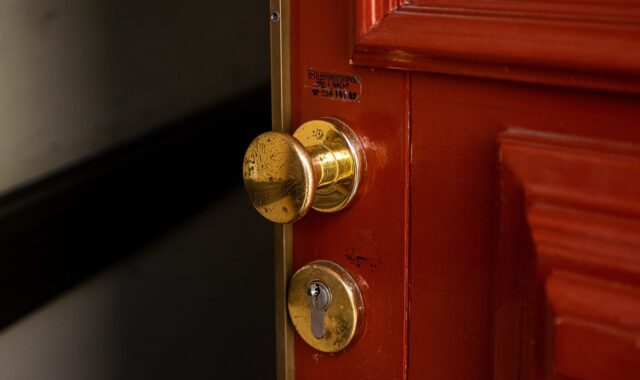
Schlage smart lock guide to Encode Plus, Sense Pro, Arrive and Connect
What to know before choosing a Schlage smart lock
Choosing a Schlage smart lock is no longer a simple single-model decision. As of September 15, 2026, Schlage’s residential lineup includes Wi-Fi deadbolts, Apple home key models, a newer Matter-over-Thread deadbolt, a push-button keypad option and Z-Wave locks for hub-based systems. The useful comparison starts with four engineering questions: which network the lock uses, how many access codes it must manage, whether the door needs a deadbolt or a lever, and what fallback remains when Wi-Fi, batteries or a smart home hub fails.
For most households, the split is practical. Choose Encode Plus if Apple home key tap-to-unlock is the priority, Arrive if you want a simpler push-button Wi-Fi deadbolt with higher code capacity, Sense Pro if Matter over Thread and Ultra Wideband hands-free unlocking fit your ecosystem, and Connect if your home is already built around Z-Wave. For more smart hardware analysis, see our product engineering coverage.
The current Schlage lineup reflects three connectivity strategies
Schlage’s residential smart locks now fall into three main connectivity approaches: direct Wi-Fi, Matter over Thread and Z-Wave. That choice affects setup complexity, battery behavior, latency, platform support and long-term interoperability.
The Encode family and Arrive are designed around built-in Wi-Fi. Schlage’s product materials state that these locks connect to a home Wi-Fi network for remote control through the Schlage Home app without an additional accessory or bridge. That is convenient for mainstream users because the router is already in place. The tradeoff is that Wi-Fi radios generally draw more power than low-power mesh protocols, so signal quality and battery estimates should be checked carefully.
Sense Pro marks a different direction. Schlage announced the Sense Pro Smart Deadbolt at CES 2025 on January 6, 2025, then announced on June 16, 2026 that it would be available beginning June 29, 2026. Schlage positions it as the brand’s first smart lock to support Matter over Thread, while the Connectivity Standards Alliance public product listing identifies Sense Pro as a Matter device using Thread transport with Specification Version 1.3 and a certified date of March 6, 2025.
Connect is the legacy path, but it remains relevant for users who prefer a dedicated smart home or security hub. The Z-Wave Plus version pairs with a compatible Z-Wave system instead of using built-in Wi-Fi as its primary remote-access route. It is less plug-and-play for casual users, but it can fit homes where locks, sensors, alarms and automations already run through a Z-Wave controller.
Model comparison for product and system decisions
The table below summarizes the practical differences. Specifications can vary by trim, region and firmware, so door fit and platform compatibility should be checked against the exact model number before purchase or deployment.
| Model | Primary connection | Notable access methods | Published code capacity | Best fit |
|---|---|---|---|---|
| Schlage Encode Plus Smart WiFi Deadbolt | Built-in 2.4 GHz Wi-Fi plus Apple Home support | Touchscreen code, app, physical key, Apple home key tap-to-lock and tap-to-unlock | Up to 100 access codes | Apple households that want home key without giving up Wi-Fi remote management |
| Schlage Encode Smart WiFi Deadbolt | Built-in Wi-Fi | Touchscreen code, app, physical key, Alexa or Google voice control when paired | Up to 100 access codes | Homes that want straightforward app control without a separate hub |
| Schlage Encode Smart WiFi Lever | Built-in Wi-Fi | Lever format for doors prepared with a standard single bore hole | Up to 100 access codes within the Encode family positioning | Side entries, utility rooms, offices and interior doors where a deadbolt is not the right form factor |
| Schlage Arrive Smart WiFi Deadbolt | Built-in Wi-Fi and Bluetooth local access | Backlit physical push-button keypad, app, physical key, Alexa and Google integrations | Up to 250 access codes | Users who prefer tactile buttons and higher code capacity over a touchscreen-focused design |
| Schlage Connect Smart Deadbolt Z-Wave Plus | Z-Wave Plus through a compatible hub or security system | Touchscreen code, physical key, app features through the paired hub platform | Up to 30 access codes | Z-Wave homes that prioritize hub-based automation and potentially longer battery life |
| Schlage Sense Pro Smart Deadbolt | Matter over Thread plus built-in Wi-Fi for Schlage Home app management | Ultra Wideband hands-free unlock with compatible Apple devices, Apple home key tap-to-unlock, keypad code, app | Up to 250 access codes | Early Matter-over-Thread adopters and Apple users with compatible hardware for hands-free unlocking |
Encode Plus remains the Apple home key reference point
The Schlage Encode Plus Smart WiFi Deadbolt became widely known because it brought Apple home key into a mainstream deadbolt. Schlage’s official product page describes support for Apple Home and Apple home keys, allowing users to tap an iPhone or Apple Watch to lock or unlock. For households already using Apple Wallet, Apple Home and Apple Watch, that can be more natural than opening an app or entering a code.
Encode Plus also keeps the familiar architecture of a Wi-Fi smart deadbolt. Schlage lists remote locking and unlocking through the Schlage Home app, up to 100 access codes, lock history, push notifications, Alexa and Google Assistant voice control when paired, and a built-in alarm for forced-entry attempts. Published specifications list four AA alkaline batteries, up to six months of battery life with typical use, a low-battery indicator and one physical backup key.
The engineering tradeoff is that Encode Plus is optimized for an Apple-home-key-plus-Wi-Fi experience rather than being positioned as Schlage’s Matter-over-Thread lock. If the goal is cross-ecosystem Matter setup, Sense Pro is the model Schlage explicitly presents for that role. If the goal is a proven Wi-Fi deadbolt with Apple tap access and a conventional keyway, Encode Plus remains the cleaner fit.
Sense Pro shows where smart lock engineering is moving
Sense Pro is the most important Schlage smart lock to watch from a product engineering perspective because it combines several current design trends in one device: Matter over Thread interoperability, Ultra Wideband proximity logic, Apple home key, keypad entry and app-based access management.
Ultra Wideband is the main differentiator. Schlage says its Converge technology uses Ultra Wideband to calculate a credentialed device’s speed, trajectory and motion, then unlock when the system determines that the user intends to enter. That is a different design philosophy from simple geofencing, which may know that a phone is near the home but cannot always identify the exact doorway or motion path with the same precision.
The requirements are also stricter. Schlage’s June 2026 launch material states that hands-free unlock with home key requires compatible Apple devices and software, including iPhone 11 or later with certain exclusions running iOS 18.5 or later, or Apple Watch Series 6 or later with certain exclusions running watchOS 11.5 or later. Tap-to-unlock support has broader Apple device requirements on Schlage’s integration page, but hands-free access is not universal across all iPhones and watches.
Sense Pro also changes the mechanical backup assumption. Schlage describes the model as having no keyway and says it includes a built-in USB-C jumpstart port for temporary power if the batteries run out. That reduces exposure to keyway picking or bumping, but it also means emergency access planning shifts from carrying a backup key to managing battery warnings, temporary power and alternate access procedures.
Arrive and Connect solve different practical problems
Schlage Arrive is not the most technically novel model, but it may be the more useful answer for access-heavy households. Schlage positions Arrive as its first push-button keypad deadbolt with built-in Wi-Fi. It supports remote management through the Schlage Home app, up to 250 access codes, lock history, notifications, Alexa and Google Home integration, auto-lock settings and local Bluetooth use when within range. See also: device architecture.
The physical keypad is the product detail that matters. Touchscreens look cleaner, but physical silicone buttons can be easier for some users, especially in low light, with gloves, or for people who prefer tactile feedback. Published Arrive materials describe the keypad as backlit and all-weather. For rental managers, extended-family homes or service access, the 250-code capacity also gives more room for temporary, recurring and role-based codes.
Connect, by contrast, is for the user who already works through a hub. The Z-Wave Plus model requires a compatible smart home or security system for remote control. Schlage lists up to 30 access codes, four AA batteries, a low-battery indicator, a physical backup key and up to one year of battery life with typical use. The capacity is lower than Arrive or Sense Pro, but the architecture can be attractive in systems where the hub manages automations, alerts and other sensors.
Installation, battery and door-fit constraints to check first
Before comparing app features, confirm that the lock physically fits the door and that the environment suits the radio. Schlage’s Encode Plus specifications list standard door thickness support from 1-3/8 inches to 1-3/4 inches and universal backset support for 2-3/8 inches or 2-3/4 inches. Arrive product specifications published for the Remsen trim list door thickness support from 1-3/8 inches to 2 inches. These differences are easy to miss and can decide the project before software setup begins.
Wi-Fi placement is another practical constraint. A battery-powered lock at the edge of a home is often far from the router and may be affected by exterior walls, metal doors, brick or mesh handoff problems. If a Wi-Fi model has weak signal, battery life and responsiveness can suffer. Schlage publishes up to six months of battery life for Encode Plus, Arrive and Sense Pro under typical use, but actual results depend on traffic, motor load, door alignment, temperature and radio conditions.
- Confirm the exact model number and trim before relying on a specification.
- Measure door thickness, bore preparation and backset.
- Check whether the door closes smoothly without the motor forcing the bolt.
- Use the battery chemistry recommended by Schlage for the model.
- For Wi-Fi models, test signal strength at the door, not just in the room.
- For Matter over Thread, confirm that a compatible Thread border router or Apple home hub is available.
- For Z-Wave, confirm hub compatibility before installation day.
Security grading is useful, but it is not the whole system
Schlage’s published Encode Plus and Arrive specifications list ANSI/BHMA A156.40-2015 Grade AAA in Security, Durability and Finish, and Schlage support material lists the Encode and Encode Plus series as also meeting ANSI/BHMA A156.36 Grade 1. BHMA materials explain that residential hardware certification evaluates security, durability and finish, with A representing the highest mark in each category under the Secure Home style grading.
These ratings matter because a smart lock is still a lock. Motorized access, phone credentials and cloud notifications do not compensate for a weak door, misaligned strike, poor screws, damaged frame or careless code management. The most secure deployment treats the smart lock as one part of the entry system: the deadbolt must throw cleanly, the strike area should be reinforced where appropriate, access codes should be limited and removed when no longer needed, and app accounts should use strong authentication.
From an engineering standpoint, the best Schlage choice is the one whose failure modes match the household. A Wi-Fi model should still accept keypad entry during an internet outage. A Z-Wave model should still operate locally if the hub is unavailable. A keyless Sense Pro installation should have a clear battery and USB-C jumpstart plan. Those details are less visible than platform logos, but they determine whether the lock feels reliable after the first month.
Frequently asked questions
Which Schlage smart lock is best for Apple home key?
Encode Plus is the straightforward choice if the main requirement is Apple home key tap-to-lock and tap-to-unlock with a conventional keyed deadbolt. Sense Pro also supports Apple home key and adds hands-free unlocking with compatible Apple devices, but it is a newer and more complex Matter-over-Thread and UWB product.
Does every Schlage smart lock use Wi-Fi?
No. Encode, Encode Plus, Encode Lever, Arrive and Sense Pro include Wi-Fi features in Schlage’s current residential materials, while Connect is intended for hub-based systems. The Z-Wave Plus version uses a compatible Z-Wave hub or security system. Wi-Fi models are easier for many consumers, while hub-based models can be better aligned with dedicated automation systems.
How many access codes do Schlage smart locks support?
The published capacities differ by model. Encode Plus and the Encode Wi-Fi family are commonly listed at up to 100 access codes. Arrive and Sense Pro are listed at up to 250 access codes. Connect Z-Wave Plus is listed at up to 30 access codes.
Is Matter over Thread available on Encode Plus?
Schlage’s current product positioning presents Sense Pro as the Matter-over-Thread smart lock. Encode Plus is positioned around built-in Wi-Fi, Apple Home and Apple home keys. Buyers who specifically need Matter should verify the exact model and certification status rather than assuming all Apple-friendly locks support Matter.
What is the safest practical buying approach?
Start with the ecosystem, then verify the physical door. Choose Apple home key, Matter over Thread, Wi-Fi app control or Z-Wave before comparing finishes. Then confirm door thickness, backset, battery access, backup entry method and code capacity. This reduces the risk of buying a lock that looks right but does not fit the system or door.