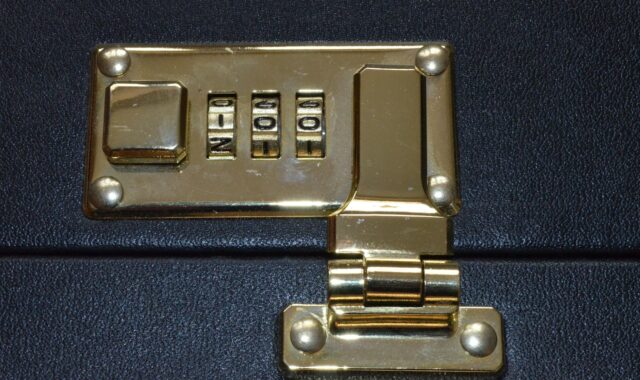
Keyless door knob engineering choices for secure and usable access
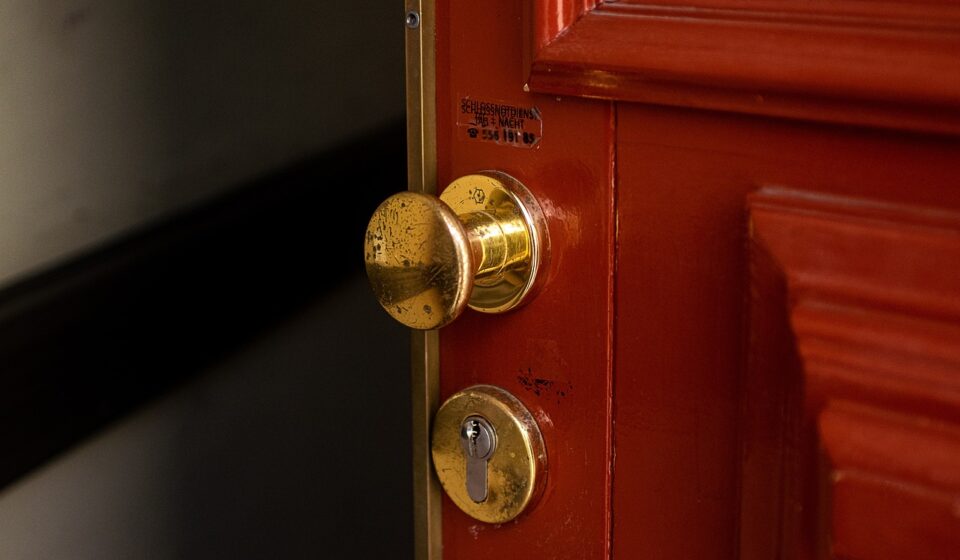
A keyless door knob can make everyday access easier in homes, rental units, and light-commercial spaces. The engineering challenge, however, is not just replacing a metal key with a PIN, card, fingerprint, phone, or app. The product still has to latch consistently, resist forced entry, operate when batteries are low, protect credentials, allow safe egress, and fit doors originally prepared for mechanical hardware.
For product teams, the right starting point is not a feature list. It is a risk map: what should remain mechanical, what can become electronic, which standards may apply, and which user failures the design must tolerate. This article summarizes the main decisions behind a dependable keyless access product, with emphasis on product engineering rather than brand comparison. For more hardware design perspectives, visit the product engineering section.
What a keyless door knob actually has to do
The phrase “keyless door knob” is used broadly in the market. It may refer to a keypad knob with an integrated latch, a lever-style electronic lock, a deadbolt-plus-knob set, a retrofit smart lock, an electronic mortise lock, or access-control trim for a small office. From an engineering standpoint, these products are not interchangeable.
A knobset that controls only the spring latch can be convenient for an interior office, storage room, garage entry, or short-term rental room. A front exterior door, however, often needs a deadbolt or another locking mechanism with higher resistance to forced entry. This distinction matters because a buyer may search for “keyless door knob” while expecting the security behavior of a deadbolt. A sound specification should state whether the product is intended for passage control, privacy control, entry security, or full exterior-door security.
The core functions usually include:
- Authentication: PIN code, RFID card, fingerprint, smartphone, mechanical override key, or a combination of methods.
- Actuation: motorized bolt movement, solenoid release, clutch engagement, or electronic authorization followed by manual turning.
- Mechanical retention: latch, deadlatch, deadbolt, strike plate, mounting screws, and door preparation geometry.
- Power management: replaceable batteries, low-voltage alerts, emergency terminals, sleep modes, and brownout behavior.
- Credential lifecycle: adding, deleting, expiring, auditing, and protecting user credentials.
- Fail-safe behavior: what happens when batteries die, electronics fail, wireless service is unavailable, or the user forgets a code.
The product promise is “keyless.” The engineering promise is controlled access without creating a weaker point than the hardware it replaces.
The mechanical platform still defines the security ceiling
Electronics can improve convenience, but they cannot compensate for weak mechanical architecture. The latch, bolt throw, strike reinforcement, screw engagement, door material, frame condition, and installation tolerance determine how the lock behaves under physical stress. A product marketed as smart or keyless should still be assessed against traditional hardware criteria.
In the United States, ANSI/BHMA residential standards are a practical reference point. The 2025 ANSI/BHMA A156.39 standard covers performance requirements for residential locksets and latches, while ANSI/BHMA A156.40 covers residential deadbolts and deadlatches. Public descriptions from ANSI and BHMA state that these standards address durability, security, and finish testing under laboratory conditions, while noting that real-world performance varies with installation, door and frame construction, maintenance, and environmental exposure.
That qualification is important. A robust keypad module cannot make a hollow-core door secure. A strong bolt cannot perform correctly if the strike plate is misaligned. A premium finish may still degrade in a coastal or high-humidity environment if the material selection is unsuitable. Product teams should treat certification and lab testing as a baseline, not as a substitute for installation design.
Latch-only access is not the same as deadbolt security
Many compact keyless knobs use a spring latch because it fits standard bored-door preparation and keeps the product simple. This may be acceptable for low-risk interior use, but latch-only products can be vulnerable if they are installed where a deadbolt would normally be specified. A deadlatch feature can reduce simple latch manipulation, but it does not turn every knobset into an exterior security product.
The practical engineering question is not “does it unlock without a key?” It is “what level of physical resistance is expected at this opening?” For exterior doors, product documentation should make clear whether a separate deadbolt is required, recommended, or integrated.
Authentication choices create different failure modes
Keyless access does not remove risk; it changes the form of risk. Mechanical keys can be lost, copied, or left under mats. PINs can be shared, guessed, observed, or left unchanged. Fingerprint readers add convenience but can struggle with wet fingers, worn fingerprints, gloves, dirt, or sensor contamination. Phone-based access depends on battery state, device ownership, app continuity, and network or Bluetooth behavior.
A useful way to compare authentication methods is to look at both convenience and recoverability.
| Method | Engineering advantage | Main limitation | Design implication |
|---|---|---|---|
| PIN keypad | Low cost, easy guest sharing, no phone required | Codes can be observed or reused | Support temporary codes, code length rules, lockout timing, and anti-peep input patterns where appropriate |
| RFID card or fob | Fast operation and familiar in offices | Tokens can be lost or transferred | Make revocation simple and avoid unclear card enrollment flows |
| Fingerprint | Fast personal access without memorized codes | Sensor reliability varies by user and environment | Provide backup access and tune false rejection behavior carefully |
| Phone app | Supports remote management and logs | Depends on device, app, account, and connectivity | Design for offline local access and clear account recovery |
| Mechanical override | Important recovery path during power or electronics failure | Can reintroduce picking or key-control risks | Protect the cylinder and document secure key storage |
No single method is ideal for all openings. A rental unit may prioritize temporary PINs and fast reset. A small office may need audit trails and administrator roles. A family home may favor keypad access with a mechanical backup. The engineering goal is graceful degradation: when the primary method fails, the user should still have a safe, controlled way to enter or exit.
Power and connectivity should be designed as safety-critical subsystems
Battery design is one of the least glamorous but most important parts of a keyless door knob. Users often discover poor power engineering only when the lock fails at the door. The product should detect battery state accurately, warn early, avoid sudden shutdown under motor load, and provide a practical emergency power or override path.
Power consumption depends heavily on the actuation model. A clutch-based design that electronically permits manual turning can use less power than a product that motor-drives a bolt on every cycle. Wi-Fi can provide direct cloud connectivity but may consume more power than local-only Bluetooth or Thread-based architectures. Thread and Matter ecosystems have attracted attention because they can support interoperable smart-home behavior while relying on lower-power mesh networking, but implementation details still determine battery life and reliability.
The Connectivity Standards Alliance describes Matter as an open smart-home protocol that uses Bluetooth Low Energy for setup and Wi-Fi, Thread, or Ethernet for device connectivity. The Alliance lists door locks among supported device categories, and its certified product database shows that Matter products can use different transport interfaces. For lock engineers, the key lesson is that “Matter compatible” or “smart home compatible” is not a complete power strategy. Radio selection, wake timing, retry logic, encryption overhead, firmware update behavior, and motor current all influence real-world battery performance.
Low-battery behavior needs more than an icon
A low-battery icon is not enough if the lock keeps accepting high-current operations until voltage collapses. Better designs use staged alerts and predictable behavior. For example, the product may warn users through keypad signals, app notifications, or audio prompts; restrict nonessential wireless activity; preserve administrator functions; and keep enough reserve for a final unlock cycle or emergency procedure.
The recovery method must also fit the user context. A 9V emergency terminal, USB-C emergency power input, hidden mechanical cylinder, or replaceable battery compartment can all work, but each option involves tradeoffs in weather sealing, tamper exposure, aesthetics, and user understanding.
Compliance is not one checklist
Compliance planning depends on where the lock is sold, where it is installed, and how it communicates. A non-connected keypad lock for a residential bedroom has a different regulatory profile from a wireless lock used as part of a commercial access-control system. See also: device architecture.
For residential locksets and deadbolts, ANSI/BHMA A156.39 and A156.40 are relevant performance references. For access-control systems, UL 294 is a common North American standard covering construction, performance, and operation of equipment intended to regulate or control entry or exit from controlled areas. Wireless models sold in the United States also require radio-frequency compliance planning, and connected consumer IoT products increasingly face cybersecurity expectations from government and industry programs.
In March 2024, the FCC adopted a framework for a voluntary cybersecurity labeling program for wireless consumer Internet of Things products, known as the U.S. Cyber Trust Mark. The FCC later described the program as a way for qualifying consumer smart products to display a mark when they meet specified cybersecurity requirements. Separately, NIST IR 8425 provides a consumer IoT cybersecurity baseline profile that includes outcomes such as product identification, configuration, data protection, interface access control, software update capability, and cybersecurity state awareness.
These programs do not make every smart lock part of the same product category. They do, however, indicate what buyers, retailers, installers, and platform partners may increasingly ask from connected hardware: update policies, vulnerability handling, protected credentials, secure onboarding, and transparent product support.
Egress and accessibility cannot be afterthoughts
Any keyless locking product installed on a path of exit must be evaluated for safe egress. Building and fire codes generally require occupants to be able to open egress doors from the inside without keys, tools, special knowledge, or unusual effort, subject to specific code exceptions and local authority approval. A keypad on the outside must not create a trapped user on the inside.
Accessibility also affects hardware form. The 2010 ADA Standards for Accessible Design require door and gate hardware on accessible routes to meet operable-part requirements, including placement between 34 and 48 inches above the finished floor. The standards also emphasize operation without tight grasping, pinching, or twisting of the wrist. This is one reason lever-style designs are often more suitable than round knobs in public or commercial settings, even when consumers casually search for a “door knob.”
Security engineering includes firmware, credentials, and lifecycle support
For a connected keyless door knob, the attack surface extends beyond the door. Product teams must consider the mobile app, cloud service, Bluetooth pairing, local radio stack, firmware update path, factory reset behavior, administrator account recovery, and data retention. A lock that is physically strong but digitally careless can still create user risk.
Good lifecycle design includes:
- Secure provisioning: the lock should not ship with universal default credentials that remain active after setup.
- Credential isolation: guest codes, administrator privileges, fingerprints, and app accounts should have clearly separated roles.
- Revocation: users must be able to remove a lost phone, deleted employee, expired guest, or misplaced card quickly.
- Firmware integrity: updates should be authenticated, resilient to interruption, and reversible or recoverable if installation fails.
- Local fallback: basic entry should not depend entirely on a cloud service when a local method is technically feasible.
- Privacy boundaries: event logs should be useful without exposing more household or workplace behavior than necessary.
Engineering teams should also plan for end-of-support. If a product depends on an app or cloud account, users need to know how long security updates, compatibility updates, and cloud functions will be maintained. Without that clarity, a durable piece of door hardware can become an early electronic-waste problem.
A practical specification checklist
Before selecting or developing a keyless door knob, teams can reduce risk by answering a few concrete questions.
- Opening type: Is this for an exterior entry, interior room, rental unit, office, storage room, or common area?
- Required locking strength: Is latch-only acceptable, or is a deadbolt or reinforced strike required?
- Door preparation: Does the product fit the backset, bore, thickness, handing, and frame condition without field modification?
- Primary users: Are users homeowners, children, tenants, staff, delivery personnel, guests, or facility managers?
- Backup access: What happens if the battery dies, the app fails, the network is down, or the user forgets the code?
- Access changes: How quickly can a manager revoke a credential after turnover, loss, or security concern?
- Environment: Will the product face rain, UV exposure, salt air, dust, freezing temperatures, or heavy use?
- Compliance path: Which mechanical, electrical, radio, cybersecurity, accessibility, and egress requirements apply?
- Support model: Who owns firmware updates, vulnerability response, replacement parts, documentation, and warranty handling?
The checklist is deliberately practical because many field failures come from mismatched assumptions. A product designed for a protected apartment corridor may perform poorly on an exposed exterior gate. A lock intended for a single household may not support the audit and revocation features a property manager expects. A connected model may satisfy smart-home users while frustrating buyers who simply wanted a local keypad.
Frequently asked questions
Is a keyless door knob as secure as a keyed lock?
It can be, but only when the mechanical platform, installation, credential design, and backup method are appropriate for the door. A keyless interface does not automatically improve physical resistance. For exterior doors, the presence and quality of the deadbolt, strike reinforcement, door frame, and installation often matter more than the keypad itself.
Should a front door use a keyless knob or a keyless deadbolt?
For many exterior front doors, a keyless deadbolt or a knob-and-deadbolt combination is more appropriate than a latch-only keyless knob. The right choice depends on the door, local code, risk level, and whether the product is being used for convenience, privacy, or primary security.
Do smart locks need Matter support?
Matter support can improve smart-home interoperability, especially for users who want one lock to work across compatible ecosystems. It is not required for every application. A local keypad lock may be better for users who do not want app or platform dependence, while a managed property may need administrative software more than consumer smart-home integration.
What is the most overlooked design issue?
Low-battery recovery is often underestimated. Users need early warnings and a clear way to regain access if power is depleted. The recovery method should be obvious, weather-resistant, tamper-aware, and documented in plain language.
Can a keyless lock be used on an exit door?
Only if the installation allows safe egress and complies with applicable codes. In general, occupants must be able to exit from the inside without a key, tool, special knowledge, or unusual effort, unless a specific code-compliant locking arrangement applies. Local authorities and qualified hardware professionals should be consulted for commercial or shared-occupancy openings.
The engineering takeaway
A keyless door knob is a small product at the intersection of mechanical security, electronics, software, human behavior, and building safety. The strongest designs do not treat these disciplines separately. They define the opening, match the lock architecture to the risk, preserve safe egress, make credential management understandable, protect the update path, and provide a reliable fallback when electronics fail.
For buyers, that means looking beyond surface features such as fingerprint access or app control. For product teams, it means designing the lock as a system: door, frame, user, credential, power source, radio environment, maintenance process, and support lifecycle all shape the final security outcome.