
How to plan a wired and wireless network for smart hardware
A hybrid network is the practical starting point
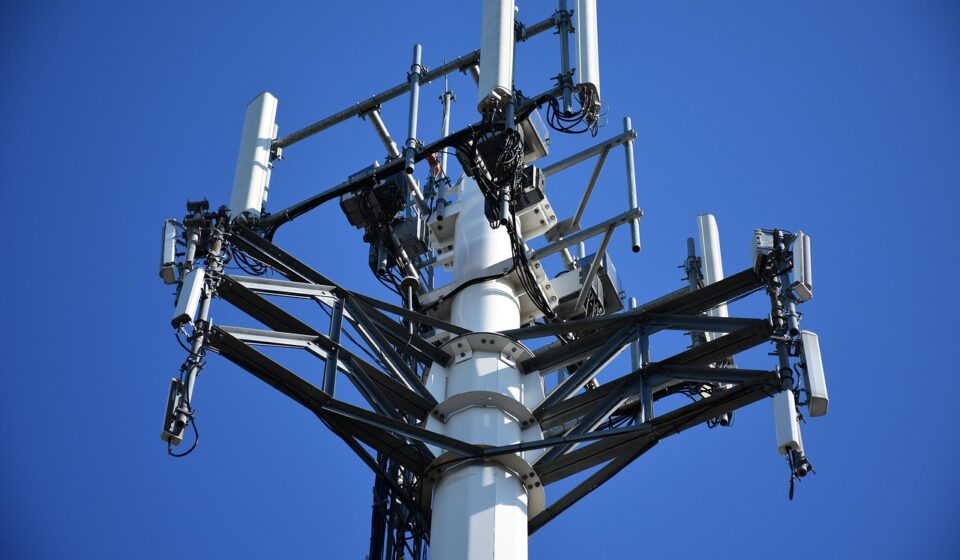
A wired and wireless network works best when it is planned as one system, not as two separate choices. For smart hardware, wired Ethernet is usually the stable base for gateways, access points, controllers, cameras and fixed devices with higher power or uptime requirements. Wireless links extend that base to mobile products, retrofit sensors, wearables, displays and low-power endpoints where cabling is impractical or too costly.
The right design depends on throughput, latency, battery life, installation cost, physical layout and security. Recent standards such as Wi-Fi 7 and Matter have expanded what wireless devices can do, but they have not removed the need for reliable wired backhaul, careful radio planning and clear device segmentation. For broader coverage of related standards and deployment issues, see our wireless connectivity section.
Why wired and wireless now need to be designed together
Smart hardware networks used to be simpler: plug in high-value fixed equipment and connect everything else to Wi-Fi. That approach is no longer enough. A modern building, vehicle, factory cell or smart home may include IP cameras, access points, lighting controllers, occupancy sensors, displays, door locks, environmental sensors, edge AI boxes, voice assistants, mobile controllers and cloud-connected gateways. Some endpoints need sustained bandwidth. Others need predictable latency, years of battery life or a dependable path for small control messages.
The Connectivity Standards Alliance describes Matter as using familiar technologies, including Bluetooth Low Energy for setup and Wi-Fi, Thread and Ethernet for device connectivity. The Matter Handbook also states that Matter focuses on Ethernet, Wi-Fi and Thread as supported link-layer technologies, with Bluetooth LE used for commissioning rather than as the sole operational transport. (csa-iot.org)
This model is useful beyond the smart home. Ethernet, Wi-Fi, Thread and Bluetooth LE usually do different jobs in the same product environment. A connected light switch might use Thread. A hub may connect by Ethernet. A phone app may use Wi-Fi to reach the controller. Bluetooth LE may help provision the device during setup. Users see one system, but the network designer has to plan several link types behind the scenes.
What each connection type does well
The most reliable connected-device designs start by matching the link to the workload. A sensor that sends a few bytes every few minutes does not need the same network as a multi-camera video recorder. A fixed controller that must remain online should not be treated like a portable speaker. The table below summarizes typical roles.
| Connection type | Where it fits | Main advantage | Main limitation |
|---|---|---|---|
| Ethernet | Gateways, access points, fixed cameras, controllers, industrial nodes, network video recorders | Stable backhaul, low interference exposure, predictable performance and optional power delivery through PoE | Requires cabling, ports, installation planning and physical access control |
| Wi-Fi | Phones, tablets, laptops, cameras, displays, appliances, mobile smart hardware and high-bandwidth retrofit devices | High local throughput without cabling and broad device support | Shared spectrum, building attenuation, roaming behavior and interference must be managed |
| Thread | Low-power smart home and building endpoints such as sensors, switches, locks and thermostats | IP-based low-power mesh networking for small control traffic | Needs a Thread Border Router to communicate with Wi-Fi or Ethernet networks |
| Bluetooth LE | Provisioning, beacons, wearables, accessories and short-range low-power functions | Low power and strong phone ecosystem support | In Matter networks, it is used for commissioning rather than as the only operational transport |
| Cellular | Remote equipment, vehicles, outdoor devices and backup WAN links | Wide-area coverage independent of local broadband | Data plans, coverage, power use and carrier certification add complexity |
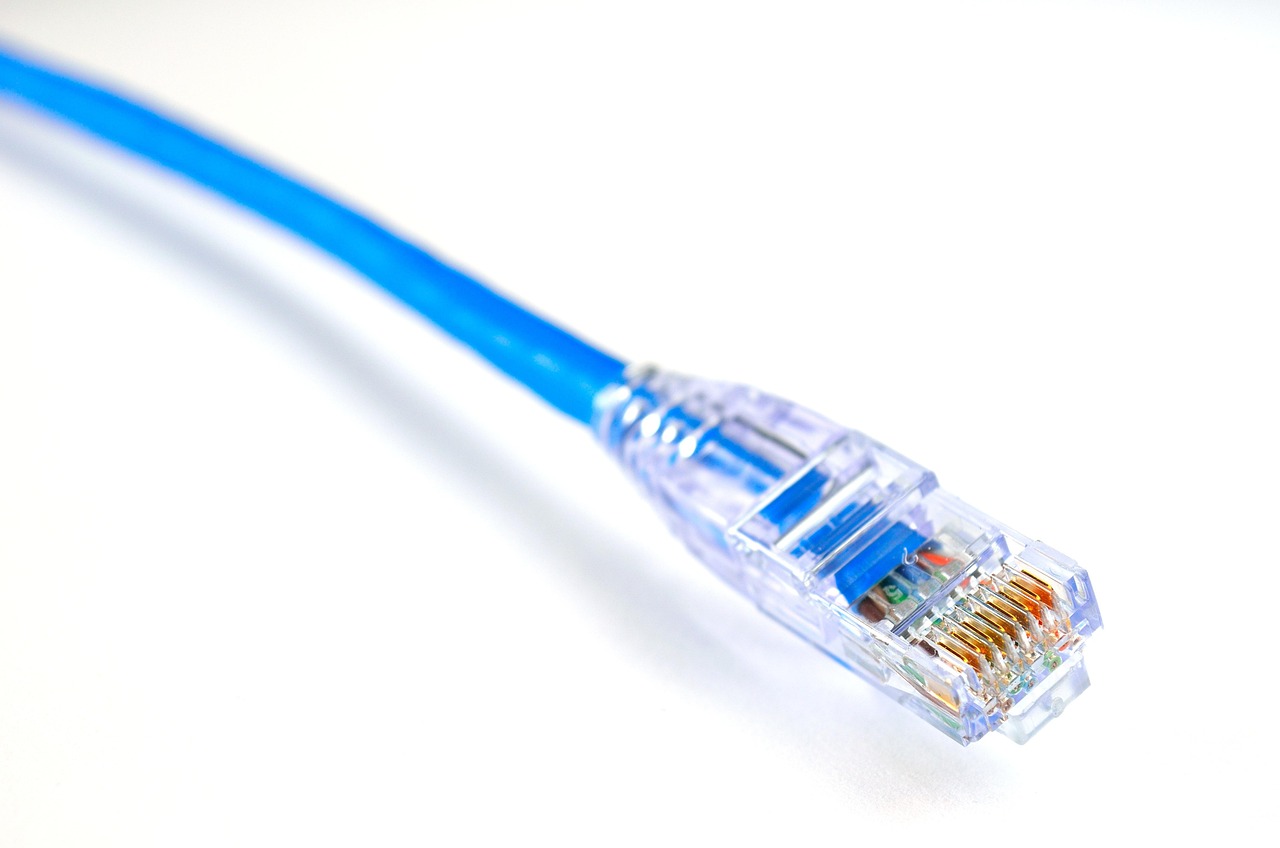
Ethernet remains important because it reduces uncertainty. Radio links are affected by walls, human bodies, neighboring networks, spectrum rules and antenna placement. A wired backhaul for access points, controllers and fixed high-value devices makes the wireless layer easier to predict and support. The Ethernet Alliance 2026 roadmap notes that enterprise access points and client devices are accelerating the move from 1000BASE-T toward 2.5G, 5G and 10G BASE-T ports, while data-center and optical links continue to move into much higher speeds. (ethernetalliance.org)
Power delivery is another reason Ethernet matters to smart hardware. IEEE records show that the IEEE 802.3bt four-pair Power over Ethernet task force completed its work with approval of IEEE Std 802.3bt-2018 on September 27, 2018. For access points, cameras, lighting, kiosks and controllers, one cable can simplify both connectivity and power planning. (ieee802.org)
Performance planning starts with traffic paths
Choosing a network type by headline speed is a common mistake. Real performance depends on traffic paths. A local automation event may only need a short path from a sensor to a controller. A camera may stream continuously to an NVR or edge processor. A firmware update may move from the internet through the router, switch, access point and endpoint radio. A voice assistant may depend on cloud round trips. Each path has different bottlenecks.
Start by grouping device traffic into four classes:
- Control traffic: small packets for switches, sensors, locks, thermostats and automation triggers.
- Media traffic: video, audio, screen sharing and camera streams that require sustained throughput.
- Management traffic: provisioning, diagnostics, logs, firmware updates and certificates.
- Backhaul traffic: aggregated data between access points, switches, gateways, storage and the internet router.
Control traffic often benefits from low-power wireless protocols or local Ethernet-connected hubs. Media traffic is usually more demanding and should be kept close to wired backhaul whenever possible. Management traffic may be bursty, but it must be reliable enough to update devices safely. Backhaul traffic deserves conservative planning because every wireless access point, camera cluster or gateway can multiply upstream load.
Wi-Fi 7 has changed the planning conversation, especially for dense or high-throughput environments. The Wi-Fi Alliance introduced Wi-Fi CERTIFIED 7 on January 8, 2024 and highlighted Multi-Link Operation, 4K QAM and 320 MHz channels as key technologies. IEEE’s 802.11 working group lists IEEE Std 802.11be-2024, known in the industry as Wi-Fi 7, as published on July 22, 2025. (globenewswire.com)
Those improvements can help compatible devices, but they do not guarantee uniform performance. Multi-Link Operation depends on support in both the access point and the client. Wider channels need available spectrum and clean radio conditions. Higher-order modulation needs strong signal quality. Wi-Fi 7 can improve the wireless part of a wired and wireless network, but it still works best when access points are connected to strong switching and backhaul.
Regulation also affects what products can do. In the United States, the Federal Register’s 2025 publication on 6 GHz rules states that the FCC expanded very-low-power device operation to the entire 6 GHz band and allowed use of up to three 320 MHz channels under defined power and operational limits. Designers should treat this as a market-specific example, not a global assumption, because spectrum availability and device classes vary by country. (thefederalregister.org) See also: device architecture.
Reliability and security are part of the same design
Reliability is not only about signal strength. It is also about failure isolation. A flat network where every device can see every other device may be easy to install, but it is harder to secure and troubleshoot. Smart hardware often includes products with different update cycles, vendors and risk profiles. A thermostat, camera, robot vacuum, door lock and developer test board should not necessarily share the same level of access.
Good practice is to separate management devices, general user devices, guest devices and IoT endpoints. In a home or small office, this may mean separate Wi-Fi networks and router-level access rules. In a commercial or industrial site, it may mean VLANs, firewall rules, switch port policies and centralized monitoring. The method depends on the equipment, but the goal is the same: allow the traffic a device needs and block the traffic it does not need.
Wired ports should not be assumed safe simply because they use cables. Exposed Ethernet jacks, outdoor cameras and ceiling-mounted access points create physical access points to the network. Wireless links also need disciplined configuration, including strong credentials, modern security modes where supported, timely firmware updates and removal of default passwords. For battery devices, security planning must also consider how updates are delivered without draining power or leaving devices offline for long periods.
Matter adds another important distinction: local control and remote access are not the same thing. The Connectivity Standards Alliance explains that Matter is a local connectivity technology and that remote access requires an internet-connected controller such as a smart speaker or hub. This means a wired or wireless Matter device may still need a reliable controller path for control away from home. (csa-iot.org)
A practical decision matrix for smart hardware
The following decision matrix can help device makers, installers and buyers choose a connection strategy without relying on vague rules such as “wireless is modern” or “wired is always better.”
| Design question | Likely choice | Reason |
|---|---|---|
| Is the device fixed, high-value and near a cable route? | Ethernet | Lower radio uncertainty and easier long-term maintenance |
| Does the device need both data and centralized power? | Ethernet with PoE | One cable can simplify installation and reduce local power adapters |
| Is the device mobile or installed where cabling is costly? | Wi-Fi or cellular | Wireless lowers installation friction and supports movement |
| Does the device send small low-power control messages? | Thread or Bluetooth LE, depending on ecosystem needs | Low-power radios are better aligned with battery endpoints |
| Is the device part of a Matter smart home network? | Ethernet, Wi-Fi or Thread for operation, Bluetooth LE for setup | This follows Matter’s supported transport model |
| Does the device aggregate traffic from many endpoints? | Wired backhaul preferred | Gateways and access points carry shared load and should be predictable |
| Will the device be deployed globally? | Design for regional variants | Wireless spectrum, power limits and certification requirements differ by market |
The most resilient answer is often hybrid. A smart display may use Wi-Fi for convenience, while the router and access points use Ethernet. A building sensor network may use Thread at the edge, Ethernet for border routers and Wi-Fi for mobile maintenance tablets. A camera may support Wi-Fi for retrofit installations but still perform better on PoE where cable is available.
Implementation checklist for a cleaner deployment
For product teams
- Define the traffic profile early: Separate control, media, management and backhaul traffic before choosing the radio or port.
- Plan certification paths: If a Matter product uses Wi-Fi or Thread, review the relevant Wi-Fi, Thread and Matter certification requirements before final hardware decisions.
- Design for weak conditions: Test through walls, near interference sources, during roaming and under cloud outage scenarios where local control should still work.
- Leave room for updates: Firmware, security patches and protocol changes require stable management channels and enough memory and power budget.
- Respect market differences: A 6 GHz feature available in one country may not be available, or may operate under different limits, in another country.
For installers and buyers
- Wire the backbone first: Routers, switches, access points, controllers and storage should be the first candidates for Ethernet.
- Place access points for devices, not just people: Cameras, appliances, sensors and outdoor equipment may need coverage in places where phones are rarely used.
- Check PoE budgets: Confirm both switch power budget and per-port capability before connecting cameras, access points or lighting devices.
- Avoid unnecessary mesh hops: Wireless mesh can be useful, but wired access point backhaul is usually more predictable when cable is available.
- Document the network: Record device locations, MAC addresses, IP ranges, SSIDs, VLANs and controller dependencies before troubleshooting is needed.
A well-planned wired and wireless network should be uneventful in daily use: devices respond, cameras stream, updates complete and users rarely think about the infrastructure. That result comes from matching each device to the right transport instead of forcing every endpoint onto the same connection type.
Frequently asked questions
Is a wired and wireless network better than wireless only?
For most smart hardware environments, yes. Wireless-only networks are convenient, but they place every device, access point uplink and traffic burst into shared spectrum. A hybrid design lets fixed infrastructure use Ethernet while wireless remains available for mobile, low-power or hard-to-cable devices.
Does Wi-Fi 7 make Ethernet unnecessary?
No. Wi-Fi 7 can improve wireless throughput and efficiency for compatible devices, but access points still need strong backhaul. Ethernet also remains useful for PoE, fixed controllers, network storage, cameras and environments where radio conditions are difficult.
Should smart home devices use Thread or Wi-Fi?
It depends on the device. Thread is well suited to low-power control devices such as sensors, switches and locks, while Wi-Fi is better for higher-bandwidth devices such as cameras, displays and appliances. In Matter environments, both can coexist through controllers and border routers.
Where does Bluetooth LE fit?
Bluetooth LE is often used for discovery, commissioning, wearables, beacons and short-range accessory functions. In Matter, Bluetooth LE helps pass network credentials during setup, while Ethernet, Wi-Fi or Thread carry normal operational communication.