How to choose a front door lock and deadbolt for a smart home
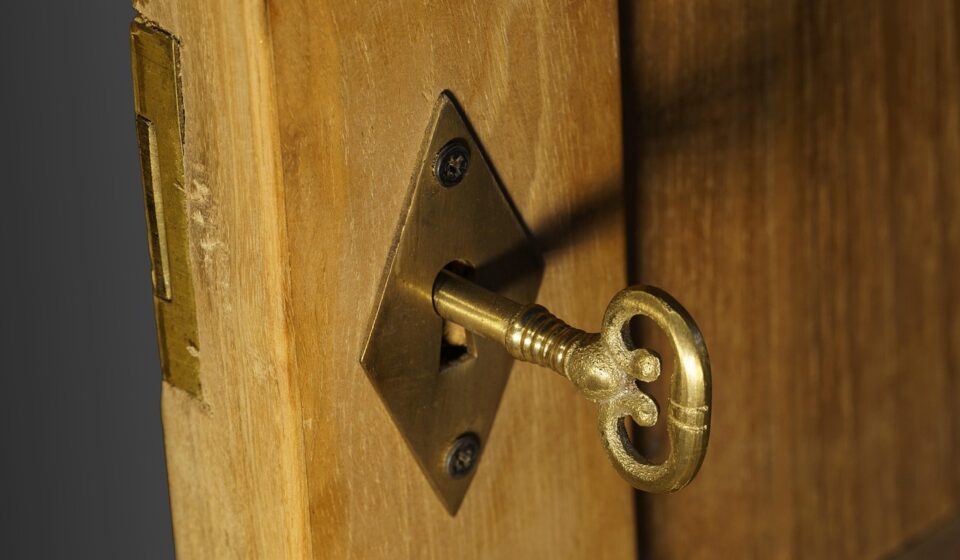
Security starts with the whole door opening
Choosing a front door lock and deadbolt should start with the door opening itself: the door, frame, strike area, emergency egress, and access-control habits. Bluetooth, Wi-Fi, and app features come later. For most homes, the practical baseline is still a properly installed single-cylinder deadbolt, a reinforced strike area, and an entry latch or handle that can be opened easily from the inside.
Smart features can add real convenience through PINs, schedules, event logs, and remote status. They do not make up for a weak frame, poor bolt alignment, an unclear firmware update policy, or a reused account password. The better way to compare options is to treat the lock as a small system: mechanical bolt and strike, door and jamb, electronics, credentials, radio protocol, cloud access, and user habits. That system view is especially useful when comparing a conventional deadbolt with a smart lock for the main entry.
The main question is not which product looks more modern. Homeowners and integrators usually need to know whether a lock is secure enough, compatible with the existing door, safe for emergency exit, and manageable over time. For a smart hardware site, the useful question is architectural: where does the security actually reside?
For more connected-device context, see the site’s device architecture section.
What the deadbolt actually does
A latch and a deadbolt play different roles in the entry system. The spring latch in a handle set keeps the door closed during normal use, but it is designed mainly for convenience. A deadbolt is a separate bolt that extends into the strike and frame when locked. Because it is not spring-loaded in the same way as a latch, it can provide stronger resistance against basic forced-entry pressure when the door, frame, and strike are also sound.
This is why many exterior doors combine a passage or keyed latch with a deadbolt above it. The latch handles everyday opening and closing; the deadbolt provides the main locked state. In a smart lock, the motor usually operates the same deadbolt that a thumbturn or key would operate in a mechanical model. The electronics change how the bolt is controlled, but they do not remove the need for proper bolt alignment and full strike engagement.
Be careful with any claim that a lock alone makes an entry secure. A high-quality cylinder installed in a hollow or damaged door is still limited by the surrounding construction. Likewise, a strong deadbolt fastened with short screws into a weak jamb may perform below expectations. The deadbolt matters, but it is only one layer.
Standards, ratings, and code signals to check
Ratings help separate tested performance from marketing language. In North America, the Builders Hardware Manufacturers Association explains its residential Secure Home label through three visible categories: security, durability, and finish. Public BHMA guidance describes A, B, and C ratings for those categories, and its A156.40 residential deadbolt information notes tests such as operating cycles and loading the door against the deadbolt. Those details matter because a front door lock and deadbolt must withstand both daily use and occasional stress.
| Signal to check | What it tells you | How to use it |
|---|---|---|
| BHMA residential rating | Indicates tested performance for security, durability, and finish under residential hardware programs. | Look for the specific rating combination, not just a vague claim of heavy-duty construction. |
| ANSI/UL 437 | Covers certain high-security key locks, including door locks and locking cylinders. | Useful for higher-risk applications, but not every residential front door requires this class of cylinder. |
| Local egress rules | Define whether the door can be opened from inside without a key, tool, or special effort. | Prefer interior thumbturn or code-compliant release designs for required exit doors, and check local code before using double-cylinder deadbolts. |
| Manufacturer update policy | Shows whether a connected lock is likely to receive security and firmware fixes. | Treat unclear support periods as a lifecycle risk, especially for remote-unlock features. |
Building-code details vary by jurisdiction, but the safety principle is consistent: a home exit should not trap occupants during an emergency. The 2024 International Building Code language for individual dwelling or sleeping units allows dead bolts or similar devices in certain single-exit situations only when they are openable from the inside without a key or tool. This is one reason single-cylinder deadbolts with an interior thumbturn are common on front doors, while double-cylinder deadbolts require special caution and local review.
How smart lock architecture changes the decision
A smart lock adds several layers above the mechanical bolt. The first is the actuator layer: motor, gearbox, clutch, position sensor, and battery management. If the bolt rubs against the strike, the motor uses more force and the battery drains faster. If the lock cannot reliably detect locked and unlocked states, the app status may be less trustworthy than it appears. In practice, door alignment is a cybersecurity issue as well as a carpentry issue, because failed remote commands can push users toward insecure workarounds.
The second layer is credential management. A smart front door lock may support PINs, app accounts, fingerprints, cards, temporary guest codes, voice assistants, or a physical key. More credential types are not automatically better. Each one adds a path to grant, revoke, forget, or misuse access. For households, the most useful features are often simple: unique codes per person, scheduled codes for recurring visitors, immediate code deletion, and a reliable audit trail that does not expose more data than needed.
The third layer is connectivity. Bluetooth is common for local setup and nearby control. Wi-Fi can enable direct cloud access but uses more power, so some locks rely on a bridge. Thread and other low-power mesh options can improve battery life when the home has compatible border routers. Z-Wave and Zigbee are still found in many security and home automation installations. Matter is relevant because the Connectivity Standards Alliance included door locks in Matter’s initial device categories, and later Matter work added improvements for latch-and-bolt lock configurations. Even so, buyers should confirm the exact platform features they need, because support for status reporting, PIN management, automations, and remote unlock can differ by ecosystem.
The fourth layer is cloud dependency. A lock that needs the vendor’s cloud for every advanced function has a different risk profile from a lock that can perform core operations locally. Cloud features can be useful for remote administration, but the essential local access path should be clear: inside thumbturn, keypad, phone-nearby method, backup key, or emergency power contacts where provided. See also: embedded platforms.
Retrofit or full replacement
A retrofit smart lock keeps part of the existing deadbolt, often replacing only the interior thumbturn side with a motorized unit. This can be attractive for renters, historic doors, and homeowners who want to preserve exterior hardware or existing keys. The trade-off is that compatibility depends on the original deadbolt’s smooth operation and the available interior space around the thumbturn.
A full replacement lock swaps more of the hardware: exterior keypad or reader, interior motor housing, cylinder, strike, and sometimes the handle set. This can provide a cleaner smart-lock experience and better-matched components, but it also increases the chance that bore size, backset, door thickness, handing, or trim clearance will become a problem. Before buying, measure the door thickness, backset, cross bore, edge bore, distance between latch and deadbolt, and any decorative trim that could block the interior housing.
For the main front door, full replacement may make sense when the existing hardware is worn, poorly rated, badly aligned, or mismatched to the desired credential model. Retrofit may be enough when the existing deadbolt is mechanically sound and the goal is remote status or limited guest-code convenience.
Setup and maintenance checklist
Installation quality has a major effect on real-world security. Use the supplied strike parts when they match the door construction, and consider longer strike screws where appropriate so the strike engages stronger framing material. The door should close without lifting, pulling, or pushing. If the bolt cannot extend fully by hand with the door closed, a small battery-powered motor should not be expected to solve the problem.
- Confirm that the deadbolt throws and retracts smoothly before installing smart components.
- Use unique PINs for each regular user instead of one shared household code.
- Delete temporary codes as soon as they are no longer needed.
- Enable two-factor authentication for the lock account when offered.
- Keep the mobile app, bridge, hub, and lock firmware updated.
- Disable features you do not use, especially broad remote access or voice unlock paths.
- Use a strong router password and consider a separate network for smart home devices.
- Check battery condition on a schedule rather than waiting for a low-battery emergency.
- Keep a mechanical or emergency access plan that does not depend on one phone.
NIST and the FTC both emphasize basic smart-home security habits such as strong unique passwords, two-factor authentication, updates, disabling unused features, and protecting the home router. For a connected lock, those basics are not optional extras. They are part of the lock’s real architecture.
Frequently asked questions
Is a smart lock safer than a normal deadbolt?
Not automatically. A smart lock can improve access control by giving each user a separate code, logging events, and letting the owner revoke access without rekeying. Physical strength still depends on the deadbolt, strike, door, and frame. Digital safety depends on updates, account security, and careful configuration of remote access.
Should a front door use a single-cylinder or double-cylinder deadbolt?
For many homes, a single-cylinder deadbolt with an exterior key cylinder and interior thumbturn is the more practical and safer default because it supports quick exit from inside. Double-cylinder deadbolts can reduce risk near glass panels, but they may conflict with egress requirements on required exit doors. Local code and the specific door location should decide the final answer.
Does Matter support smart door locks?
Yes, door locks are within Matter’s supported smart-home device scope, and the standard has continued to evolve for lock use cases. That does not mean every Matter controller exposes the same lock features. Before buying, verify the functions that matter to you, such as lock status, PIN management, automations, battery reporting, and whether remote unlock requires extra confirmation.
What is the most overlooked part of a front door lock upgrade?
Door alignment is often overlooked. A deadbolt that rubs, stops short, or requires pressure on the door may seem like a small nuisance with a manual thumbturn. With a smart lock, the same friction can cause failed locking events, noisy operation, inaccurate status, and shorter battery life. Fix the mechanical fit before adding connectivity.