Kwikset SmartKey deadbolt architecture and security trade-offs
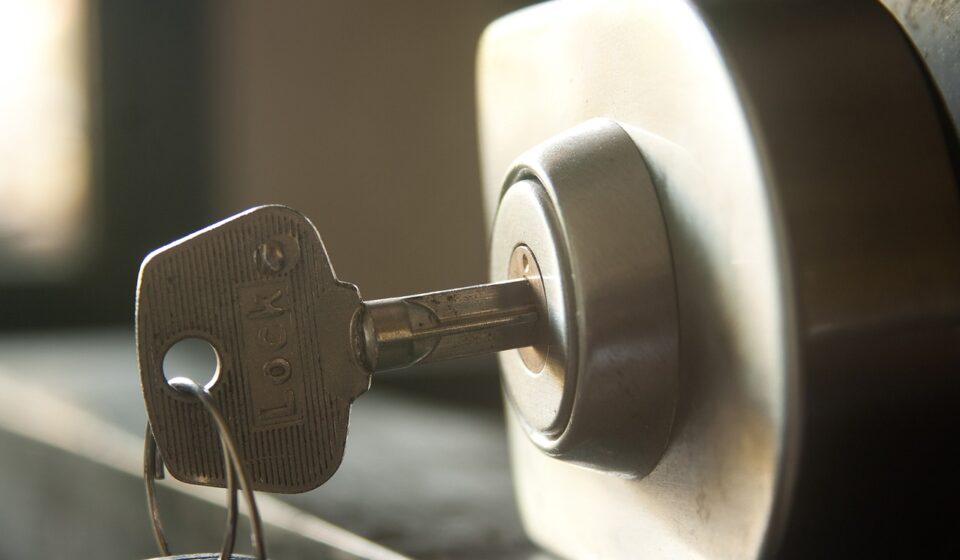
A Kwikset SmartKey deadbolt is a residential deadbolt built around a user-rekeyable SmartKey cylinder. If the current working key is still available, the owner can change the lock to a new compatible key without removing the cylinder or calling a locksmith. That is useful after a move, a lost spare key, contractor access, roommate turnover, or when several doors need to operate on one key. The trade-off is equally important: SmartKey is not the same thing as a connected smart lock, and it does not replace good door preparation, strike reinforcement, code-compliant egress, or the correct security grade. For more hardware breakdowns, see our device architecture section.
What a Kwikset SmartKey deadbolt actually is
The term Kwikset SmartKey deadbolt often creates two different expectations. In Kwikset’s product language, SmartKey refers to the mechanical re-key technology, not necessarily to Wi-Fi, Bluetooth, fingerprints, apps, or cloud access. A mechanical 660 or 980 SmartKey deadbolt can be completely offline. Some Kwikset electronic deadbolts also include SmartKey cylinders as a backup keyway, but the electronic access system and the SmartKey cylinder should be evaluated as separate layers.
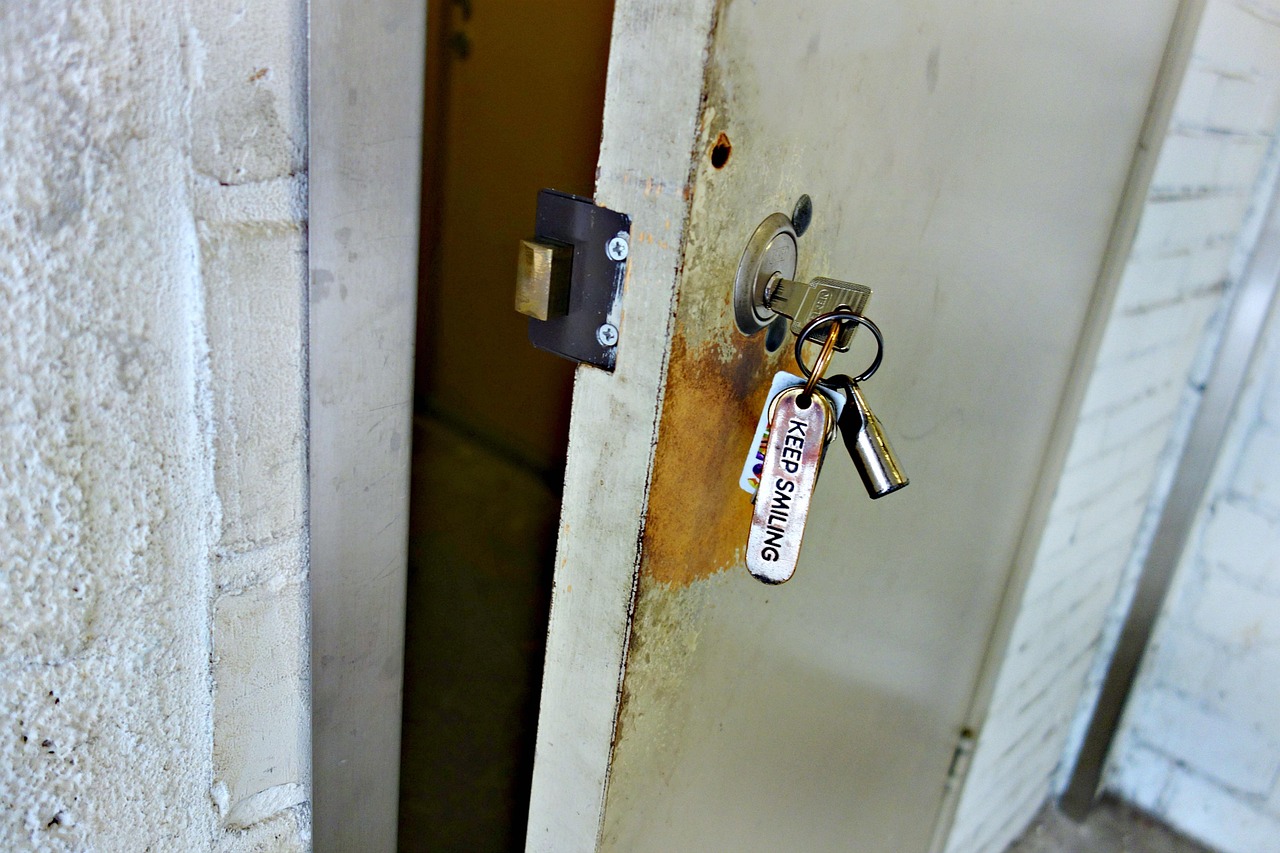
At the door level, the assembly still uses familiar deadbolt architecture: an exterior cylinder, an interior thumb turn on single-cylinder models, a bolt or latch assembly that projects into the strike, mounting screws, and trim. The main difference is inside the exterior cylinder. Instead of treating re-keying as a locksmith-only operation that requires disassembly and pin replacement, SmartKey adds a reset interface that allows the cylinder to learn a new key profile when the correct procedure is followed.
Kwikset’s current product pages describe common SmartKey deadbolts as fitting standard residential door preparations, typically with adjustable backsets of 2-3/8 inch or 2-3/4 inch and common door thickness ranges such as 1-3/8 inch to 1-3/4 inch on many single-cylinder models. Exact dimensions, finish options, included strikes, and certification labels still vary by SKU, so the model number matters more than the general SmartKey name.
The SmartKey cylinder architecture
SmartKey is best understood as a cylinder subsystem inside a deadbolt, not as a complete door-security system. Kwikset’s SmartKey materials describe a patented side-locking-bar approach that replaces the traditional pin-and-tumbler design used in many residential cylinders. In practical terms, the correct key positions internal elements so the locking bar can retract and the plug can rotate. During re-keying, the SmartKey tool and the working key place the cylinder into a learn state so it can accept a new key profile.
| Architecture layer | Role in the deadbolt | Why it matters |
|---|---|---|
| Exterior keyway and cylinder | Accepts the operating key and controls rotation from outside | This is where SmartKey re-keying and key compatibility are most relevant. |
| SmartKey reset slot | Receives the SmartKey tool during the re-key sequence | It enables owner re-keying only when the current working key is available. |
| Side-locking-bar mechanism | Verifies the internal key profile before rotation | It is the core architectural difference from a conventional pin-tumbler cylinder. |
| Deadbolt latch and strike | Transfers the lock’s holding function into the frame | A strong cylinder cannot compensate for a weak strike, poor alignment, or short screws. |
| Interior thumb turn or interior key cylinder | Controls egress-side operation | Single-cylinder thumb turns are usually simpler for emergency exit, while double-cylinder versions require code review. |
This architecture is also why SmartKey can be convenient without being electronic. No battery is required for the mechanical re-key function. The lock is “smart” in the sense that the cylinder can be reset by the owner, not because it communicates with a phone or hub.
How the re-key process changes the threat model
The re-key process is simple but conditional. The normal procedure requires the current working key, the SmartKey tool, and the new compatible key. The current key is inserted and rotated, the SmartKey tool is inserted and removed, the old key is removed, and the new key is inserted and rotated through the prescribed sequence. Afterward, the old key should no longer operate the cylinder.
That changes day-to-day access control for many homes. If a contractor had a temporary key, the homeowner can re-key the deadbolt after the job. If several Kwikset-compatible doors need one key, SmartKey can make everyday use simpler. If a tenant moves out of a small rental unit and the lock is a suitable SmartKey model, the key can be changed without removing the lock from the door.
The main limitation is that the ordinary SmartKey process depends on possession of the current functioning key. If all valid keys are lost, the lock generally needs a reset cradle, a locksmith, or replacement, depending on the cylinder and model. That is both a security feature and an inconvenience: a person should not be able to walk up with only a blank key and reprogram the lock.
There is also a keyway distinction. Many standard SmartKey residential products are designed around the common KW1 keyway, and Kwikset product pages for models such as the 980 describe re-keying to a KW1 keyway key. Key Control products are different because they are intended for property management. Some use separate tenant and manager cylinder concepts, so compatibility should not be assumed from the SmartKey label alone.
Security ratings are product-specific, not SmartKey-wide
A practical way to compare a Kwikset SmartKey deadbolt is to separate the cylinder feature from the product’s tested hardware grade. SmartKey tells you the lock can be re-keyed by the owner. It does not automatically tell you the deadbolt’s security grade, durability grade, finish performance, bolt strength, or installation quality.
BHMA’s residential hardware program rates products in security, durability, and finish categories, using A, B, and C labels for the Secure Home program. BHMA’s A156.40 overview for residential deadbolts describes testing areas such as operation, durability, security and strength, and finish. Its 2025 summary gives examples of test severity, including high cycle counts for residential latch durability and a deadbolt strength test involving a 1,350-pound load against the deadbolt. Those tests show why a certification label is more useful than marketing language alone.
Kwikset product pages also show why the exact model matters. The 980 SmartKey single-cylinder deadbolt is positioned as a higher-security deadbolt and is listed with Grade 1 or Grade AAA language depending on the labeling format. The 660 SmartKey deadbolt is commonly listed as Grade 3. Key Control models add a different access-management architecture and may show grade language that depends on the exact variant. A buyer should therefore compare the exact SKU, not simply the word SmartKey.
| Kwikset family example | Typical SmartKey role | Specification point to verify |
|---|---|---|
| 660 SmartKey deadbolt | Entry-level residential self-rekeying deadbolt | Commonly listed as Grade 3; verify exact trim and SKU. |
| 980 SmartKey deadbolt | Higher-grade mechanical deadbolt with SmartKey | Often listed with Grade 1 or AAA residential performance language. |
| 816 or Key Control deadbolt | Property-management style access using separate cylinder concepts | Confirm door thickness, keyway behavior, and current grade label before specifying. |
For architects, builders, and facility managers, this distinction is essential. SmartKey is a cylinder capability. Grade 1, Grade 2, Grade 3, or AAA is a product-performance claim tied to a particular tested product configuration. See also: embedded platforms.
Where SmartKey improves usability
The strongest argument for a SmartKey deadbolt is operational control. Re-keying is no longer an event that necessarily requires scheduling a service call. For homeowners, that matters during common transitions: buying a home, ending a lease, changing caregivers, lending a key to a dog walker, or coordinating several exterior doors. For small property operators, it can reduce lock-management friction, especially when paired with the right Key Control product rather than an improvised master-key plan.
SmartKey can also reduce the temptation to keep too many active spare keys in circulation. If a lost key creates uncertainty, resetting the cylinder to a new key can be faster than replacing all matching locks. That is a real security improvement when the alternative is doing nothing.
Another benefit is standardization. If multiple Kwikset-compatible SmartKey locks are installed, a household can often align them to one key. That choice still needs planning. The convenience of one key also means that losing that key may affect more doors, so households should keep key control and re-key procedures organized.
Where the architecture has limits
A deadbolt is only one layer in a door assembly. Even a high-grade cylinder cannot fix a hollow or weakened door, a short strike screw, a split jamb, poor bolt alignment, or glass located close enough to the thumb turn to create a reach-in risk. If the bolt does not extend cleanly into the strike, the lock may be harder to operate and less reliable under load. Installation quality is therefore part of the architecture.
There are also life-safety limits. Double-cylinder deadbolts, which require a key on the inside, can raise egress concerns. Building and fire codes vary by jurisdiction, but the general principle in major model codes is that occupants should be able to exit from the inside without a key, tool, or special knowledge unless a specific code-permitted exception applies. For typical homes, a single-cylinder deadbolt with an interior thumb turn is often the simpler and safer choice, but local code and the door’s use should control the final decision.
Finally, SmartKey should not be described as undefeatable. Kwikset materials state that SmartKey is designed to resist picking and bumping, and some materials reference testing against UL 437 paragraph 11.6. That does not mean every SmartKey deadbolt is a full commercial high-security cylinder or that the door assembly is immune to forced entry. A realistic evaluation considers cylinder resistance, bolt strength, strike reinforcement, door construction, visibility, lighting, and user behavior.
Practical selection checklist
- Confirm the model, not just the feature. A 660 SmartKey and a 980 SmartKey are not equivalent simply because both can be re-keyed.
- Check the grade label on the exact SKU. Retail pages may show ANSI Grade 1, Grade 2, Grade 3, or BHMA AAA-style language depending on product family and labeling system.
- Match the door preparation. Verify door thickness, backset, bore requirements, strike style, and whether the package includes the latch and strike you need.
- Plan key control. Decide whether you want one key for multiple doors, temporary keys for contractors, or a property-management approach.
- Keep the current key during re-keying. The standard SmartKey process depends on it.
- Reinforce the frame. Long strike screws, proper alignment, and a solid jamb often matter as much as the cylinder.
- Review egress rules before choosing double-cylinder hardware. Safety and local code should come before convenience or aesthetics.
Frequently asked questions
Is a Kwikset SmartKey deadbolt a smart lock?
Not necessarily. SmartKey is a mechanical re-key technology. A mechanical SmartKey deadbolt has no app, radio, battery, or internet connection. Some Kwikset electronic locks include SmartKey cylinders, but the electronic functions are a separate layer.
Can I re-key a SmartKey deadbolt without the old key?
The normal homeowner procedure requires the current working key. If that key is lost, the lock may need a reset cradle, locksmith service, or replacement depending on the model and condition.
Does SmartKey mean the deadbolt is Grade 1?
No. SmartKey identifies the re-keyable cylinder technology, not a universal grade. Kwikset lists different SmartKey deadbolt families with different grade claims, so the exact SKU and certification label should be checked.
Should I choose a single-cylinder or double-cylinder SmartKey deadbolt?
For many residential entry doors, a single-cylinder deadbolt with an interior thumb turn is simpler for emergency exit. Double-cylinder deadbolts may be considered near glass, but they can create egress concerns and should be checked against local code requirements.
What is the main takeaway?
A Kwikset SmartKey deadbolt is most valuable when you need convenient key control without electronics. For security, treat SmartKey as one part of the system: choose the right grade, install the strike correctly, protect the door frame, and keep emergency egress safe.