Smart locks for glass doors and the embedded platform decisions that matter
Smart locks for glass doors solve a specific hardware problem: many glass doors cannot accept the drilling, mortise preparation or frame-mounted hardware used on timber or metal doors. The lock therefore becomes a mechanical, electrical and embedded platform decision, not just an app-enabled accessory. A reliable design has to hold securely on glass, preserve safe egress, manage credentials when systems are offline, survive power loss and match the actual door geometry. For manufacturers, integrators and technical buyers, the question is not only which lock looks suitable. It is which architecture can support the door type, user flow, safety obligations and maintenance model over years of operation.
Why glass doors create a different smart lock problem
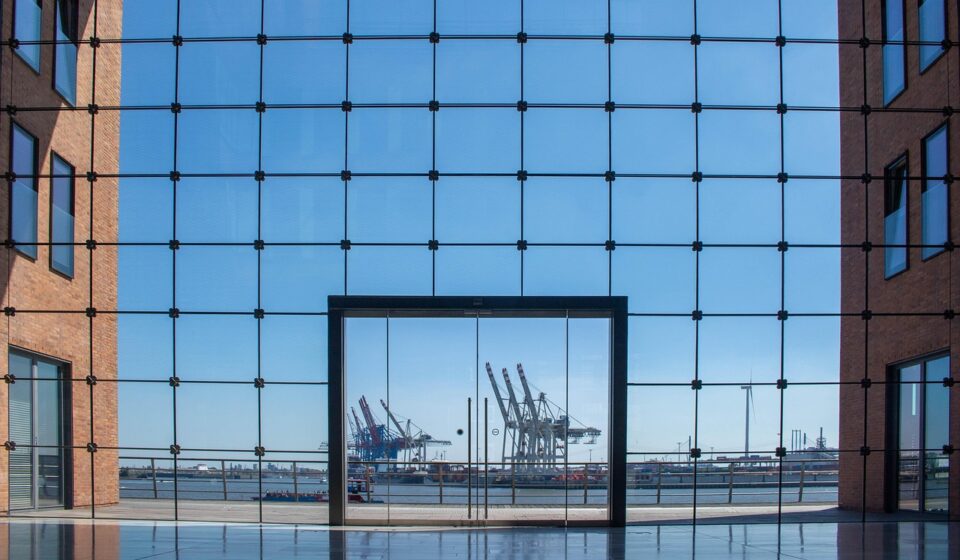
Standard smart deadbolts assume a prepared door leaf, a predictable latch edge and a strike plate fixed into a solid frame. Many glass doors do not provide those conditions. Frameless swing doors, framed aluminum storefront doors, sliding glass doors and interior office partitions each create different mechanical limits. A lock may need to clamp to glass, engage a strike box, drop a bolt into the floor, use electromagnetic holding force or work with a patch fitting instead of a conventional latch case.

The glass itself changes the engineering risk. Tempered glass cannot be casually re-drilled after manufacture, and any clamp or housing must distribute force without point loading. Door alignment also matters because glass systems can flex or shift as hinges wear, floors settle or temperatures change. A smart module that works in a tabletop demonstration may fail in service if the bolt has little tolerance for sag, the sensor misreads door position or the battery compartment is difficult to reach.
That is why smart locks for glass doors should be evaluated as complete systems. The lock body, strike, door sensor, credential reader, controller, firmware and backup access method all affect reliability. On the software side, the embedded platform has to keep the door usable when a phone is unavailable, a wireless network is down or a cloud service cannot be reached.
Main lock architectures for glass door applications
There is no single glass-door smart lock architecture. The right design depends on whether the opening is a private interior door, a public entrance, a retail display, a shared office room or part of a life-safety egress path.
| Architecture | Common fit | Embedded platform focus | Main limitation |
|---|---|---|---|
| Clamp-on smart bolt or latch | Frameless swing glass doors and office partitions | Low-power motor control, door sensing and local credentials | Mechanical alignment and glass thickness compatibility |
| Smart rim or patch lock | Glass doors with compatible rails, patches or adjacent frames | Credential reader integration and event logging | May require more installation planning than a retrofit device |
| Electromagnetic lock with access controller | Commercial doors and controlled entries | Controller logic, relay outputs, request-to-exit devices and power supervision | Must be designed around egress rules and power-loss behavior |
| Sliding glass door smart lock | Retail cabinets, interior sliding panels and some residential-style sliders | Position detection, anti-tamper sensing and compact battery operation | Varies widely by rail and door profile |
| Reader plus electric strike or bolt | Framed glass storefront doors | Credential processing, secure relay control and audit trail | Frame preparation and code compliance are project-specific |
A clamp-on lock can reduce invasive installation, but its compatibility still has to be verified against glass thickness, door gap, swing direction and strike position. Electromagnetic locks can be robust in commercial access control, but they move the design discussion toward power supplies, fire alarm interfaces, request-to-exit hardware and local code review. For an editorial overview of related hardware platform topics, see the embedded platforms section.
Safety, standards and code considerations
Glass-door locks often sit at the intersection of security and life safety. A lock that blocks unauthorized entry may be unacceptable if it also prevents emergency exit or fails unpredictably during power loss. This is especially important for public-facing doors, office exits, healthcare areas, schools, retail stores and multi-tenant buildings.
Several standards may be relevant, depending on the jurisdiction and installation type. UL Solutions describes UL 294 as the standard for access control system units and UL 1034 as a standard used for burglary-resistant electric locking mechanisms. UL has also noted that the 2024 editions of major North American building and life-safety codes reference listed hardware for certain special locking arrangements, including sensor-released, controlled-egress and delayed-egress door systems. For project teams, the practical implication is straightforward: an app-controlled lock should not be treated as exempt from access-control and egress requirements.
ANSI/BHMA standards also help define hardware expectations. ANSI’s approved standards records list ANSI/BHMA A156.44-2025 for hardware for architectural glass openings and ANSI/BHMA A156.36-2020 for auxiliary locks. These documents are not marketing checklists; they are part of the technical language used by manufacturers, specifiers and authorities when evaluating door hardware categories.
For any commercial project, the authority having jurisdiction should be involved when egress, fire-rated openings or public access are in scope. A product description alone is not enough. The installed assembly, wiring method, power supply, exit device, signage and fail-safe or fail-secure behavior can all affect whether the system is acceptable.
Credential choices are becoming a platform decision
Older access systems often separated the lock from the reader. Newer smart locks for glass doors increasingly combine mechanical locking, credential reading, wireless communication and audit logging in one enclosure. That makes the embedded platform a central design choice.
Common credential options include PIN codes, RFID cards, NFC mobile keys, Bluetooth Low Energy phone keys, fingerprints, temporary access links and administrator apps. Each option has trade-offs. PIN codes are easy to issue but can be shared. Cards are familiar but require lifecycle management. Fingerprints reduce user friction but introduce enrollment, privacy and sensor-quality issues. Phone-based credentials are convenient but depend on mobile operating systems, battery state and interoperability.
The Connectivity Standards Alliance announced Aliro 1.0 on February 26, 2026 as a communication protocol and credential standard for access points across homes, offices, hospitality venues and other environments. The important point is not that every glass-door lock will immediately adopt one standard. The broader signal is that mobile credentials, NFC, Bluetooth Low Energy and ultra-wideband are moving toward more formal interoperability expectations.
From an embedded design perspective, platform flexibility matters. A lock built around a closed, non-updatable credential stack may age quickly. A more resilient design separates the secure credential element, radio subsystem, motor control and application firmware so that security patches and ecosystem updates can be delivered without replacing the mechanical lock body.
Power, connectivity and offline operation
Power is one of the most underestimated issues in smart glass-door locks. A residential-style door may tolerate a battery change reminder. A shared office door or retail access point needs clearer rules for low-battery behavior, emergency access and maintenance responsibility. Battery chemistry, motor current, radio duty cycle, temperature and usage frequency all affect service life.
Wi-Fi can simplify direct cloud connectivity, but it usually increases energy demand. Bluetooth Low Energy is efficient for phone proximity, although it may need a gateway for remote management. Thread and other low-power mesh approaches can be attractive where an ecosystem already supports them. Wired access-control controllers reduce battery concerns but increase installation complexity. None of these options is universally superior; the best choice follows the door’s traffic pattern and maintenance model. See also: device architecture.
Offline behavior deserves special attention. A lock should define what happens when the internet connection fails, when the local gateway is down, when the phone app cannot reach the cloud and when the battery is critically low. In many installations, local credentials, mechanical override, administrator recovery and event storage matter more than another remote convenience feature.
Useful embedded platform features
- Local credential validation so authorized users can still enter during network outages.
- Secure firmware update support with rollback protection and version tracking.
- Low-power sensing for door position, bolt position, tamper events and battery state.
- Hardware-backed key storage for mobile credentials and administrative secrets.
- Clear fail-safe or fail-secure logic matched to the opening’s safety role.
- Event logs that distinguish unlock method, user, time, error state and manual override.
NIST’s digital identity guidance is not a building-door code, and it does not govern physical access installations. Still, its treatment of authenticators is useful as an engineering reference point: biometrics and device-held secrets should be handled carefully, and authentication should not rely on a single weak factor when risk is higher. Applied to glass-door access, that supports layered design rather than blind trust in one app or one credential.
Installation details that decide real-world reliability
The lock choice often succeeds or fails before firmware becomes relevant. Installers should verify glass thickness, door gap, swing direction, stile width, floor clearance, handle interference, cable path, frame material and strike alignment. They should also confirm whether the glass is frameless, framed, laminated, tempered or part of a rated assembly. A clamp designed for one glass thickness range may be unsafe or unstable on another.
Door usage should guide product selection. A meeting-room door with light traffic has different needs from a storefront entrance used hundreds of times per day. A retail display case may prioritize tamper alerts and compact battery service. A main entrance may need integration with an access-control panel, fire alarm interface, request-to-exit sensor and monitored power supply.
Environmental exposure matters as well. Exterior glass entrances may face condensation, direct sun, wind load, dust and temperature swings. Interior office partitions may be less harsh but more sensitive to appearance, acoustic seals and quiet operation. Motor noise, LED brightness and reader placement can affect user acceptance even when security performance is adequate.
A practical evaluation checklist
Before selecting or designing smart locks for glass doors, use a structured checklist rather than comparing app features alone.
- Door type: frameless swing, framed swing, sliding, cabinet, storefront or interior partition.
- Glass and mounting: thickness, edge clearance, available clamping area and whether drilling is possible.
- Locking method: bolt, latch, maglock, electric strike, patch lock or rail-mounted lock.
- Egress requirement: private room, controlled entrance, exit route or special locking arrangement.
- Credential plan: PIN, card, NFC, BLE, biometric, mobile wallet or mixed mode.
- Power model: battery, wired low voltage, supervised power supply or hybrid backup.
- Offline plan: local access, mechanical key, emergency power contact or administrator override.
- Maintenance: battery replacement, firmware updates, audit export and credential revocation.
- Compliance review: product listings, local code, AHJ requirements and documentation.
The strongest projects usually begin with door geometry and safety classification, then move to credentials and software. Reversing that order can lead to a lock that looks modern but does not fit the opening, cannot be approved or becomes difficult to maintain.
Frequently asked questions
Can a normal smart deadbolt be installed on a glass door?
Usually no. Most smart deadbolts are designed for prepared timber, metal or composite doors with a standard bore and edge latch. Frameless glass doors normally require clamp-on, patch, strike-based or electromagnetic solutions designed for glass hardware conditions.
Are smart locks for glass doors safe during a power failure?
They can be, but only if the system is designed for the correct failure mode. Some openings require fail-safe behavior to support egress, while others may require fail-secure behavior to protect assets. Battery backup, mechanical override and code compliance should be reviewed before installation.
Is fingerprint access a good choice for glass office doors?
Fingerprint access can be convenient for small groups, but it should not be the only recovery method. Enrollment quality, privacy expectations, wet or worn fingers, sensor maintenance and administrator override all matter. Many projects combine biometrics with PIN, card or mobile credentials.
Do Matter or Aliro make glass-door locks easier to choose?
They can improve interoperability in supported ecosystems, but they do not remove mechanical, safety or installation constraints. A lock still has to fit the glass door, meet the project’s access requirements and behave correctly during outages.
What is the most important embedded design feature?
For many real installations, reliable offline operation is the most important feature. A glass-door smart lock should continue to validate authorized users, record events where appropriate and provide a defined recovery path even when the cloud, gateway or phone app is unavailable.
Bottom line
Smart locks for glass doors require a broader evaluation than ordinary smart locks. The best choice depends on door construction, mounting constraints, egress obligations, credential strategy, power design and firmware support. Recent attention to access-control standards and mobile credential interoperability makes the embedded platform more important, not less. A durable system treats the lock as part of a complete door, safety and access-control architecture rather than as a standalone gadget.