Schlage keypad door handle diagnostics for fit, codes and battery issues

Quick diagnostic answer
A Schlage keypad door handle is usually a keypad lever from the FE series, most often the FE575 Auto-Lock or FE595 Flex Lock. Both are electronic keypad levers with a physical latch, a keyed cylinder for override, and a 9V battery. They suit doors that need code-based entry without a connected smart-lock platform. The first diagnostic question is the required locking behavior: the FE575 stays locked from the outside and requires a code for entry, while the FE595 can be switched from the interior thumbturn between locked and unlocked passage behavior.
For field checks, start with four basics: whether the door matches the required thickness and backset, whether the latch moves freely without binding, whether the lock has a fresh alkaline 9V battery, and whether the programming code is still available. Schlage documentation lists support for up to 19 user codes, two pre-set four-digit user codes, standard residential door preparation, and ANSI/BHMA Grade 2 certification for these keypad lever products. For more practical lock and access hardware notes, see the field diagnostics archive.
What counts as a Schlage keypad door handle?
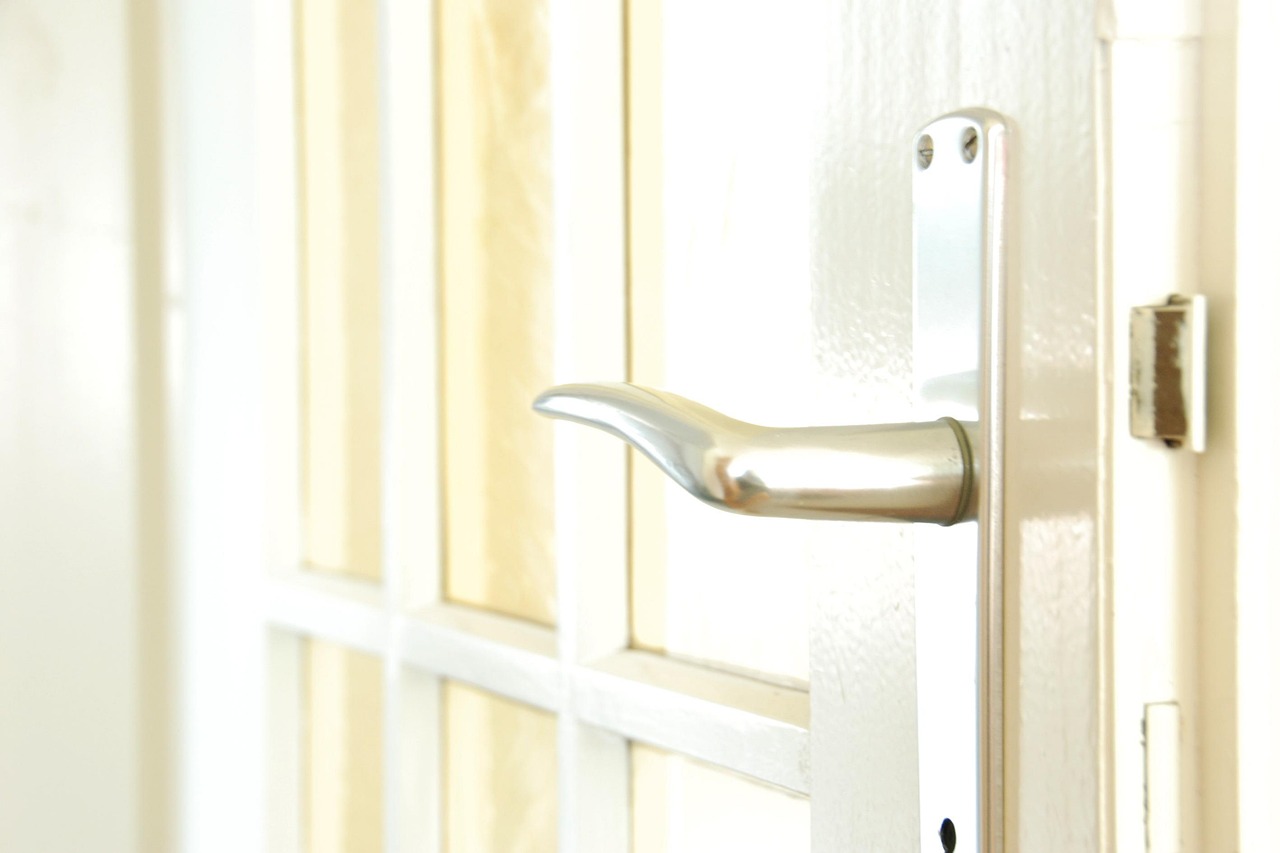
Searches for “schlage keypad door handle” usually refer to a keypad lever rather than a deadbolt. In Schlage naming, the keypad lever family includes models such as FE575 and FE595. These products are different from Schlage keypad deadbolts, touchscreen deadbolts, and Wi-Fi smart locks. The distinction matters because a lever retracts a spring latch, while a deadbolt throws a separate bolt into the frame.
That hardware difference changes both diagnostics and expectations. If the outside lever spins or moves but the latch does not retract after a valid code, the fault path is not the same as a deadbolt that fails to throw. With a keypad lever, the check usually moves through battery condition, code status, latch alignment, lever handing, interior thumbturn position, and the mechanical connection between the exterior lever and latch assembly.
Schlage positions these keypad levers as code-operated locks for locations such as front doors, back doors, garage entry doors, home offices and similar access points. That does not mean every exterior door should rely on a keypad lever alone. In many homes and small offices, a keypad lever may be paired with a separate deadbolt depending on risk level, door construction, local practice and site policy.
FE575 vs FE595 locking behavior
The first model-level diagnostic is behavioral. A user may report that the lock “will not stay unlocked,” “keeps requiring a code,” or “does not lock from the keypad.” Those symptoms can be normal, depending on whether the installed lock is an FE575 or an FE595.
| Diagnostic point | FE575 Auto-Lock | FE595 Flex Lock |
|---|---|---|
| Outside entry | Code required under normal operation | Code required when set to locked mode |
| Passage mode | Not designed to stay unlocked from outside | Can be set to unlocked from the inside thumbturn |
| Best fit | Shared doors where the outside should normally remain locked | Doors that sometimes need free passage and sometimes need keypad access |
| Common confusion | User expects it to behave like a passage lever | User expects keypad or key to set the locked state |
Schlage support material describes the FE575 as the always-locked style from the outside. It is built around automatic relocking behavior, so it is not the right model when the occupant wants the door to remain unlocked for visitors during certain hours. The FE595 uses Flex Lock behavior instead. Its interior thumbturn lets the user choose whether the outside lever is locked or left in a passage-style state.
This model split causes many unnecessary service calls. If a newly installed FE575 always asks for a code, that may be correct operation rather than a defect. If an FE595 appears to let anyone open the door from outside, check the interior thumbturn before assuming the keypad has failed.
Pre-install fit checks that prevent false failures
Many keypad lever complaints begin before the electronics are involved. If the latch is misaligned, the bore is wrong, the backset is unsupported, or the door is under pressure from weatherstripping, a valid code may look like it has failed because the mechanical latch cannot move freely.
Door thickness, backset and bore
Schlage product specifications for these keypad levers list compatibility with common residential door thicknesses of 1-3/8 in. to 1-3/4 in. and adjustable backsets of 2-3/8 in. or 2-3/4 in. The cross bore is commonly listed as 2-1/8 in. for the FE series. These dimensions should be confirmed before replacing a mechanical lever with a keypad version.
When the backset is wrong, the latch tailpiece and lever assembly may not line up cleanly. When the bore is oversized, uneven or shifted, the exterior keypad assembly can sit under stress. Either condition can create symptoms that appear electronic, such as inconsistent unlocking or a lever that feels rough after code entry.
Latch movement and strike alignment
Before programming, test the lock with the door open and then closed. With the door open, the latch should retract smoothly. If it works open but not closed, the likely issue is the strike plate, frame movement or weather seal pressure. Do not compensate for a binding latch by overtightening screws or forcing the lever; that can add stress to the lock body and make intermittent failures worse.
For a field technician, the simplest separation test is to operate the lock with the door open, then repeat the same operation with the door closed. A difference between the two points to door alignment rather than code memory.
Programming code and user code diagnostics
The programming code is not the same as a user code. This is one of the most important distinctions when diagnosing a Schlage keypad door handle. The programming code is used to add, delete or change settings. User codes are the four-digit codes used for everyday entry.
Schlage documentation for the FE575 and FE595 family describes two pre-set unique four-digit user codes and storage for up to 19 user codes. That capacity is suitable for many homes and small offices, but it is not the same as managed access control. There is no audit trail, user schedule or remote revocation unless a different connected lock platform is used.
If a user code stopped working
- Confirm the user is entering a user code, not the programming code.
- Check whether all user codes were disabled or deleted during a previous programming attempt.
- Try a known valid code with the door open to remove latch pressure from the test.
- Replace the battery before assuming memory failure, especially if keypad response is weak or inconsistent.
- If the lock has changed ownership, perform a documented reset only after confirming that the programming code and mechanical key access are available.
If the programming code is missing
For inherited doors, rental turnovers and builder-installed hardware, the programming code may not be in the original paperwork. Schlage support articles commonly point users to labels on the lock or documentation, depending on model and installation condition. In practice, a technician may need to remove the interior assembly carefully to inspect labeling. That should be done only when the door is open and key override access is understood.
If the programming code cannot be confirmed, do not guess repeatedly or rely on copied codes from unrelated locks. Keypad lock codes are unit-specific. A factory reset may restore default programming behavior, but it can also erase working user codes, so it should be treated as a controlled maintenance step rather than a casual test. See also: device architecture.
Battery, keypad and lockout symptoms
The FE575 and FE595 are battery-powered electronic locks. Manufacturer materials list one 9V battery, and Schlage user guidance recommends a high-quality alkaline 9V replacement. Schlage user documentation also cautions against relying on lithium batteries for these keypad locks because their end-of-life voltage behavior may provide less warning before failure.
A low or unstable battery can create misleading symptoms. The keypad may light, beep or accept digits but still fail to engage the internal mechanism consistently. For diagnostics, replace the battery early with a fresh alkaline battery from a known package. This is usually faster and cleaner than chasing programming faults while the electronics are underpowered.
| Symptom | Likely area to check | Practical field step |
|---|---|---|
| Keypad lights but door does not open | Battery strength, latch binding or lock state | Test with door open and install a fresh alkaline 9V battery |
| Valid code works only sometimes | Battery, worn keypad, internal engagement or door pressure | Remove frame pressure from the test, then retest several times |
| Door always requires a code | Normal FE575 behavior or FE595 set to locked mode | Identify model and inspect interior thumbturn position |
| Outside lever turns freely without retracting latch | Normal locked behavior, failed engagement or wrong lock mode | Enter a known valid code with door open and listen for engagement |
| Battery is dead and keypad is inactive | Power loss | Use the mechanical key override, then replace battery from inside |
The mechanical key override is not just a convenience; it is part of the lockout plan. Schlage user materials describe key override as the access method when the battery is completely dead or when no valid user code is known. For any site using keypad levers, key control remains an operational requirement.
Security and access-control limits
A Schlage keypad door handle can improve convenience because users do not need to distribute physical keys for every access event. It can also reduce the casual security risks created by hidden spare keys. However, it should not be described as a full access-control system. The FE575 and FE595 are locally managed keypad locks, not networked credential systems.
Schlage product pages and specifications list ANSI/BHMA A156.2 Grade 2 certification for the keypad lever models. BHMA and ANSI grading relates to tested hardware performance, including durability and security categories under applicable standards. A grade is useful when comparing hardware, but it does not make the whole opening secure by itself. Door material, frame reinforcement, strike installation, glass proximity, key control and user behavior all remain part of the security picture.
For exterior doors, the question is not only whether the keypad lever is convenient. It is whether the complete opening meets the site’s risk and code requirements. A residential side door, interior office, utility room or garage entry may have different needs from a public-facing commercial door. If life-safety egress, fire rating, delayed egress, accessibility or commercial occupancy rules are involved, a qualified locksmith, hardware consultant or code official should review the opening.
Field workflow for a Schlage keypad door handle
A structured workflow prevents unnecessary resets and part replacements. The following sequence separates fit, power, programming and model behavior for most FE575 and FE595 service calls.
- Identify the model. Confirm whether the lock is FE575 Auto-Lock or FE595 Flex Lock. Do not diagnose passage behavior until the model is known.
- Check the door open. Operate the latch and keypad with the door open. If it works open but fails closed, focus on alignment.
- Replace the battery. Use a fresh high-quality alkaline 9V battery and tuck wires carefully so they are not pinched under the cover.
- Verify code type. Separate the programming code from user codes. Confirm that the tested code is intended for entry.
- Inspect mechanical movement. Check lever handing, screw tension, latch orientation, strike position and exterior lever engagement.
- Review lock behavior with the user. Explain whether the installed model supports passage mode, automatic relocking or only local code management.
- Reset only when justified. Use factory reset as a documented step when ownership, code loss or corrupted programming is likely, not as the first action.
This process also helps determine whether replacement is appropriate. If the door is out of alignment, a new keypad handle may inherit the same failure. If the user needs schedules, audit logs, remote changes or app control, replacing an FE575 or FE595 with the same class of keypad lever will not solve the access-management problem.
Frequently asked questions
Is a Schlage keypad door handle the same as a smart lock?
Not necessarily. FE575 and FE595 keypad levers are electronic keypad locks, but they are not the same as Wi-Fi or app-managed smart locks. They are programmed locally at the lock and are best understood as standalone electronic levers.
Can the FE575 stay unlocked during the day?
The FE575 Auto-Lock is designed to remain locked from the outside and require a code for entry. If passage behavior is needed, the FE595 Flex Lock is the more relevant model because it can be switched from the inside between locked and unlocked states.
How many codes can a Schlage keypad lever store?
Schlage specifications for the FE575 and FE595 family list two pre-set four-digit user codes and storage for up to 19 user codes. The programming code is separate from those everyday user codes.
What battery should be used?
Schlage user guidance calls for a high-quality alkaline 9V battery. In a diagnostic visit, battery replacement should be an early step because weak power can imitate keypad, code or engagement problems.
What should be checked before replacing the lock?
Check model behavior, door alignment, latch movement, strike position, battery condition, user code status and access to the programming code. Replacement is more likely to help when those basics are correct and the lock still fails consistently with the door open.